- sales@orchidmhs.com
- +91 9322487698
- +91 7028807698
- ISO 9001:2015


What Are the Different Types of Pneumatic Conveyors
07 Feb 2026
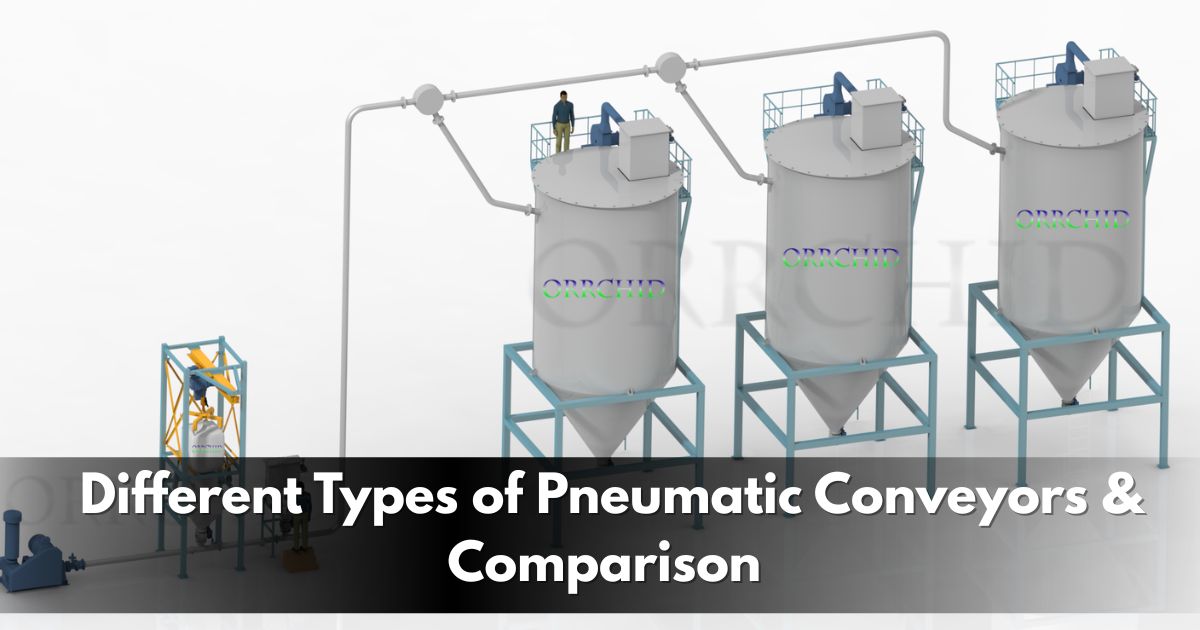
Pneumatic conveyors are widely used in industries where powders, granules, and bulk solids need to be transported in a controlled, enclosed, and dust-free manner. Unlike mechanical conveyors, pneumatic systems use air or gas as the conveying medium to move materials through pipelines.
However, pneumatic conveying is not a single technology. There are different types of pneumatic conveyors, each designed for specific material properties, conveying distances, capacities, and process requirements.
This article explains the main types of pneumatic conveyors, how they work, and where each type is best suited, helping industries choose the right system for their application.
What Is a Pneumatic Conveyor
A pneumatic conveyor is a material handling system that transports bulk materials through a closed pipeline using air pressure or vacuum. The material is suspended or pushed along the pipeline by the moving air stream.
Pneumatic conveying systems are commonly used in food processing, pharmaceuticals, chemicals, plastics, cement, and minerals because they offer enclosed transport, flexible routing, and reduced dust generation.
How Pneumatic Conveying Systems Are Classified
Pneumatic conveyors are typically classified based on how air moves the material and the pressure level used for conveying.
At a high level, pneumatic conveyors fall into two main categories:
- Dilute phase pneumatic conveying
- Dense phase pneumatic conveying
Each of these can further operate under pressure or vacuum conditions.
1. Dilute Phase Pneumatic Conveyors
How Dilute Phase Conveying Works
In dilute phase systems, material is conveyed at high air velocity. The particles are fully suspended in the air stream and travel through the pipeline in a continuous flow.
This is the most commonly used type of pneumatic conveying due to its simple design and versatility.
Key Characteristics of Dilute Phase Conveyors
- High conveying air velocity
- Material remains airborne throughout transport
- Continuous flow operation
- Simple system design
Typical Applications
Dilute phase pneumatic conveyors are suitable for:
- Free-flowing powders and granules
- Non-fragile materials
- Applications where material degradation is not critical
They are widely used in plastics, food ingredients, chemical powders, and light bulk materials.
Limitations
High air velocity can cause:
- Particle attrition
- Pipeline wear
- Higher energy consumption
These factors must be considered for abrasive or fragile materials.
2. Dense Phase Pneumatic Conveyors
How Dense Phase Conveying Works
Dense phase systems transport material at low air velocity but high pressure. Instead of being fully suspended, material moves in slugs, plugs, or dunes along the pipeline.
This method is gentler on the material and significantly reduces wear.
Key Characteristics of Dense Phase Conveyors
- Low conveying velocity
- High pressure operation
- Material moves in compact formations
- Reduced air consumption
Typical Applications
Dense phase pneumatic conveyors are best suited for:
- Fragile or abrasive materials
- Fine powders requiring gentle handling
- Applications where product integrity is critical
They are commonly used in cement, fly ash, chemicals, pigments, and pharmaceuticals.
Limitations
- Higher initial system cost
- More complex control requirements
- Requires detailed material testing
3. Pressure Pneumatic Conveying Systems
How Pressure Systems Work
In pressure conveying systems, material is pushed through the pipeline using positive air pressure generated by a blower or compressor. The material is fed into the line from a pressure vessel or rotary airlock.
Where Pressure Conveying Is Used
Pressure systems are suitable for:
- Long-distance conveying
- High-capacity applications
- Multiple discharge points
They are commonly used in large industrial plants and bulk material handling setups.
4. Vacuum Pneumatic Conveying Systems
How Vacuum Systems Work
Vacuum conveying systems use negative pressure to pull material through the pipeline. Material is drawn into the system and conveyed to a receiver.
Where Vacuum Conveying Is Used
Vacuum systems are ideal for:
- Short to medium distances
- Single pickup with multiple sources
- Hygienic and dust-sensitive environments
They are widely used in pharmaceutical and food processing plants due to their containment and safety advantages.
5. Lean Phase vs Dense Phase Vacuum Conveying
Vacuum systems can also operate in lean or dense phase modes depending on material properties and system design.
| Parameter | Lean Phase | Dense Phase |
| Air velocity | High | Low |
| Material behavior | Suspended | Plug flow |
| Material stress | Higher | Lower |
| Typical use | Free-flowing powders | Fragile materials |
6. Continuous vs Batch Pneumatic Conveying Systems
Continuous Conveying Systems
Material flows continuously through the pipeline.
Best suited for:
Processes requiring steady material supply and constant throughput.
Batch Conveying Systems
Material is conveyed in measured batches.
Best suited for:
Precise dosing, recipe-based processing, and controlled feeding operations.
Comparison Summary of Pneumatic Conveyor Types
| Type | Velocity | Pressure | Best For |
| Dilute Phase | High | Low to medium | Free-flowing materials |
| Dense Phase | Low | High | Fragile or abrasive materials |
| Pressure System | Variable | Positive | Long-distance conveying |
| Vacuum System | Variable | Negative | Hygienic environments |
| Continuous | Steady | Variable | Constant supply |
| Batch | Intermittent | Variable | Controlled dosing |
How to Choose the Right Pneumatic Conveyor Type
To select the right pneumatic conveying system, consider:
- Material characteristics
- Required conveying distance
- Throughput and capacity
- Dust control and hygiene needs
- Energy efficiency and wear concerns
Testing material behavior is strongly recommended before final system design.
Engineering-driven providers like Orchid Material Handling typically evaluate these factors holistically to design pneumatic conveying systems aligned with real operational needs.
Common Mistakes to Avoid
- Assuming all powders behave the same
- Choosing dilute phase for abrasive materials
- Ignoring energy consumption at high velocities
- Not considering future capacity expansion
Avoiding these mistakes improves system reliability and longevity.
Conclusion
Pneumatic conveyors offer flexible, enclosed, and efficient material handling solutions, but their performance depends entirely on choosing the right type for the application.
Understanding the different types of pneumatic conveyors helps industries select systems that protect material quality, reduce wear, improve safety, and ensure consistent process flow. When designed correctly, pneumatic conveying becomes a reliable backbone of modern bulk material handling operations.