- sales@orchidmhs.com
- +91 9322487698
- +91 7028807698
- ISO 9001:2015


A Complete Guide to Drag Chain Conveyor Maintenance
10 Aug 2026
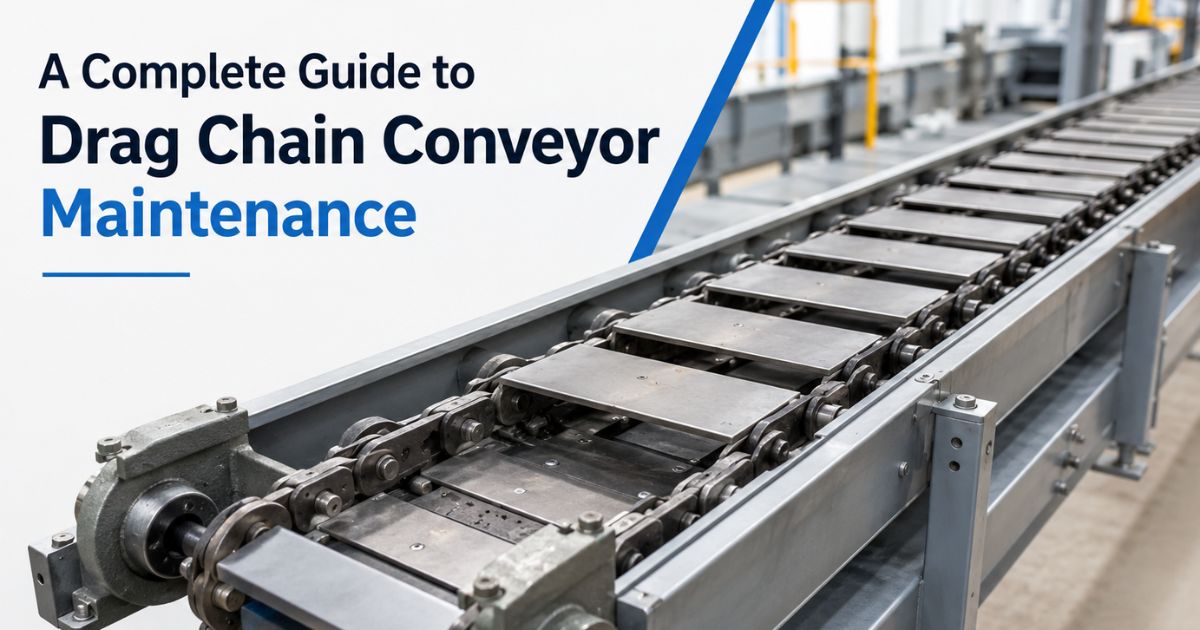
At Orchid Material Handling Solutions, we design and manufacture customized Mechanical Conveyor Systems for reliable movement of powders, granules, and bulk solids across industrial processes. A Drag Chain Conveyor can deliver dependable performance in demanding material handling applications, but like any continuous conveying equipment, regular maintenance is essential to keep it operating efficiently.
Drag chain conveyors are commonly used where materials need to be transported horizontally or along controlled routes in a closed or enclosed conveying arrangement. With continuous exposure to material loads, friction, dust, and operating cycles, components such as chains, sprockets, bearings, flights, and drive systems can gradually wear.
A practical maintenance program helps identify these issues early, reduce unexpected downtime, and extend the working life of the conveyor.
Why Is Drag Chain Conveyor Maintenance Important?
A drag chain conveyor depends on multiple mechanical components working together. If one component starts wearing excessively, it can affect the performance of the complete system.
Regular maintenance helps:
- Reduce unexpected breakdowns
- Maintain consistent material flow
- Minimize chain and sprocket wear
- Reduce material spillage
- Improve energy efficiency
- Extend equipment life
- Improve workplace safety
- Lower long-term maintenance costs
For plants handling powders and bulk solids continuously, preventive maintenance is particularly important because small mechanical issues can quickly develop into production interruptions.
What Components Should You Check During Drag Chain Conveyor Maintenance?
A useful maintenance routine should cover the complete conveying system rather than focusing only on the chain.
Inspect the Drag Chain
The chain is one of the most critical wear components.
Check regularly for:
- Excessive elongation
- Damaged links
- Cracks or deformation
- Corrosion
- Uneven wear
- Loose or damaged attachments
If the chain is showing significant wear, we recommend addressing the issue before it affects sprockets or other drive components.
Check Sprockets and Drive Components
Worn sprockets can accelerate chain wear and create irregular movement.
During inspection, check for:
- Tooth wear
- Misalignment
- Abnormal vibration
- Unusual noise
- Loose connections
The drive motor and gearbox should also be checked for abnormal temperature, vibration, and operating noise.
Inspect Bearings
Bearings support rotating components and help maintain smooth conveyor operation.
Look for:
- Excessive noise
- Increased temperature
- Vibration
- Lubrication issues
- Visible damage
Replacing a worn bearing early can help prevent secondary damage to other components.
Check Flights, Scrapers and Attachments
Depending on the conveyor configuration, flights or scrapers are responsible for moving material through the conveying path.
Inspect them for:
- Wear
- Bending
- Cracking
- Loose fasteners
- Uneven contact
Damaged attachments can reduce conveying efficiency and may result in inconsistent material movement.
How Often Should a Drag Chain Conveyor Be Maintained?
There is no single maintenance interval that applies to every drag chain conveyor.
The frequency depends on:
- Material characteristics
- Operating hours
- Conveying capacity
- Abrasiveness of the material
- Environmental conditions
- Conveyor design
- Production intensity
However, we recommend establishing a routine inspection schedule rather than waiting for visible failure.
Daily Checks
Operators can monitor:
- Unusual noise
- Vibration
- Material spillage
- Chain movement
- Drive performance
- Abnormal temperature
Weekly Checks
A more detailed inspection can include:
- Chain condition
- Sprocket condition
- Bearings
- Fasteners
- Guards
- Material buildup
Periodic Maintenance
Depending on operating conditions, scheduled maintenance should include lubrication, alignment checks, component inspection, and replacement of worn parts.
The exact schedule should always be based on the equipment configuration and operating environment.
6 Best Practices for Drag Chain Conveyor Maintenance
1. Keep the Conveyor Clean
Material buildup around chains, sprockets, bearings, and discharge points can interfere with normal operation.
Regular cleaning helps prevent:
- Material accumulation
- Component wear
- Contamination
- Restricted movement
For powder handling applications, controlling dust and material buildup is particularly important.
Where required, a conveyor can also be integrated with Dust Air Filtration Systems to support cleaner plant operations.
2. Maintain Correct Chain Tension
Incorrect chain tension can accelerate wear.
Excessive tension can place additional load on:
- Bearings
- Sprockets
- Gearboxes
- Drive motors
Insufficient tension may result in poor chain engagement and irregular movement.
Follow the equipment manufacturer’s recommended tension and inspection procedure.
3. Lubricate Components as Recommended
Proper lubrication reduces friction and mechanical wear.
Depending on the conveyor design, lubrication may be required for bearings, chains, or other moving components.
However, lubrication should always follow the manufacturer’s recommendations. Excessive lubrication can attract dust and create additional maintenance issues, particularly in powder-handling environments.
4. Monitor Material Loading
Overloading a drag chain conveyor can increase mechanical stress and accelerate component wear.
Monitor:
- Material feed rate
- Conveyor capacity
- Loading consistency
- Material accumulation
If production requirements increase significantly, review whether the existing conveyor capacity is still appropriate rather than continuously operating beyond its intended conditions.
5. Check Alignment Regularly
Misalignment can create uneven chain and sprocket wear and increase mechanical stress.
Check the alignment of:
- Chain
- Sprockets
- Shafts
- Drive components
- Conveyor housing
Correcting alignment issues early can help prevent more expensive component failures.
6. Replace Worn Components Before Failure
Waiting until a component completely fails can result in unplanned downtime and secondary damage.
Monitor the condition of:
- Chains
- Sprockets
- Bearings
- Flights
- Seals
- Drive components
A planned replacement is generally easier to manage than an emergency breakdown during production.
What Are the Signs of Drag Chain Conveyor Failure?
Knowing the early warning signs can help maintenance teams act before a major breakdown occurs.
Watch for:
- Unusual rattling or grinding sounds
- Excessive vibration
- Chain jumping or irregular movement
- Increased motor load
- Material spillage
- Reduced conveying capacity
- Excessive chain elongation
- Abnormal bearing temperature
- Visible sprocket or flight wear
If several of these symptoms appear together, the conveyor should be inspected before continuing normal operation.
How Can You Extend the Life of a Drag Chain Conveyor?
The most effective approach is to combine preventive maintenance with correct operating practices.
We recommend:
- Following a documented inspection schedule
- Keeping the conveying path clean
- Maintaining correct chain tension
- Monitoring drive components
- Avoiding unnecessary overloading
- Checking alignment periodically
- Replacing worn components proactively
- Recording recurring maintenance issues
It’s also important to ensure that the conveyor is correctly selected for the material and required throughput from the beginning. A maintenance program cannot compensate for a system that is consistently operating outside its intended application.
When Should You Consider Replacing the Conveyor?
Not every performance issue requires complete conveyor replacement.
In many cases, replacing individual wear components or correcting alignment can restore performance. However, replacement may need to be considered when:
- The conveyor is consistently overloaded
- Major components are repeatedly failing
- Structural deterioration has occurred
- Maintenance costs are increasing significantly
- Production requirements have changed
- The existing design no longer matches the material or process
If your production requirements have changed, we recommend reviewing the complete material handling process before deciding whether to repair, modify, or replace the conveyor.
How Drag Chain Conveyors Fit Into a Complete Material Handling System
A Drag Chain Conveyor is often only one part of a larger industrial material handling process.
Depending on the application, it may work alongside:
- Pneumatic Conveying Systems
- Bulk Storage Systems
- Industrial Mixers
- Weighing & Batching Systems
- Powder Handling Accessories
- Bag Filling Systems
- Dust Air Filtration Systems
Looking at the complete process helps identify whether maintenance issues are coming from the conveyor itself or from upstream and downstream material flow.
Why Choose Orchid Material Handling Solutions?
At Orchid Material Handling Solutions, we look at conveyor performance from an application and engineering perspective. Our team considers the material being handled, required capacity, conveying route, operating conditions, and integration requirements before recommending a solution.
Our Mechanical Conveyor Systems are designed for industrial applications where reliable material movement and long-term performance are important. We also provide integrated Pneumatic Conveying Systems, Bulk Storage Systems, Industrial Mixers, Weighing & Batching Systems, Powder Handling Accessories, Bag Filling Systems, Dust Air Filtration Systems, and Industrial Control Panels.
If you’re experiencing recurring chain wear, material flow issues, or increasing maintenance requirements, our recommendation is to evaluate the complete conveyor application rather than replacing individual components without understanding the underlying cause.
Frequently Asked Questions
Basic operating checks should be performed regularly, while detailed inspections should follow a preventive maintenance schedule based on operating hours, material characteristics, and conveyor usage.
Incorrect chain tension, misalignment, overloading, inadequate lubrication, abrasive materials, and insufficient cleaning can contribute to premature component wear.
Excessive chain elongation, damaged links, irregular movement, abnormal noise, or repeated sprocket engagement problems can indicate that the chain requires replacement or detailed inspection.
Yes. Drag chain conveyors can be designed for suitable powders, granules, and bulk solids. The appropriate conveyor configuration depends on material characteristics, capacity, conveying distance, and process requirements.
Orchid evaluates the material, throughput, plant layout, operating conditions, and integration requirements before recommending a suitable Mechanical Conveyor System. This application-first approach helps ensure reliable conveying performance and easier long-term maintenance.