- sales@orchidmhs.com
- +91 9322487698
- +91 7028807698
- ISO 9001:2015


How Do Conveyor Belts Work? Types, Components & Uses
18 Aug 2026
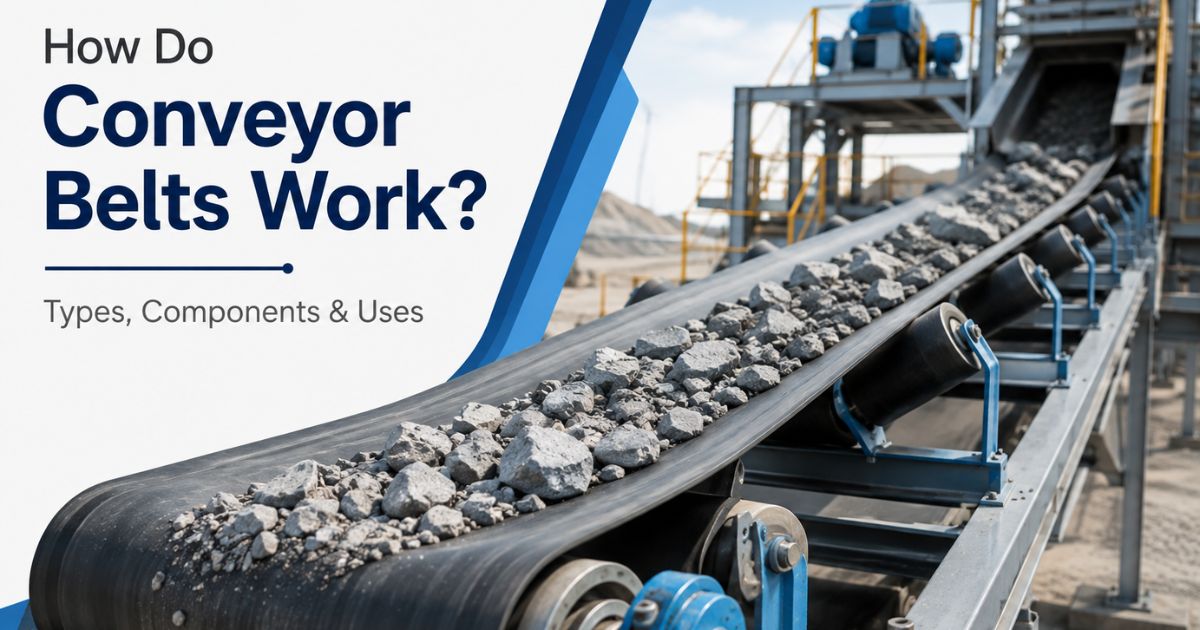
At Orchid Material Handling Solutions, we design and manufacture customized Mechanical Conveyor Systems for industries that need reliable, continuous movement of materials and products. Conveyor belts are one of the most widely used mechanical conveying solutions, helping manufacturers move materials efficiently between different stages of production, processing, and packaging.
But how does a conveyor belt actually work? What are its main components? And which type of conveyor belt is suitable for a particular application?
Whether you’re planning a new production line or evaluating an existing material handling system, understanding these basics can help you make a better equipment decision.
How Does a Conveyor Belt Work?
A conveyor belt works by using a continuous belt loop that moves around rotating pulleys. One of the pulleys is connected to a motor and drive system, which provides the power required to move the belt.
In a typical conveyor system:
Material Loading → Belt Movement → Material Transfer → Discharge
The belt carries the material from the loading point to the discharge point while supporting continuous and controlled movement.
Depending on the application, conveyors can be designed for horizontal movement, inclined conveying, or integration with other material handling equipment.
The exact configuration depends on factors such as material type, required capacity, conveying distance, plant layout, and operating conditions.
What Are the Main Components of a Conveyor Belt System?
A conveyor belt is only one part of a complete conveyor system. Several mechanical components work together to maintain smooth and reliable operation.
Conveyor Belt
The belt provides the surface on which materials or products are transported. Its construction and material depend on the application, load, operating temperature, and product characteristics.
Drive Pulley
The drive pulley transfers power from the motor and moves the belt around the conveyor.
Tail Pulley
The tail pulley is generally positioned at the opposite end of the conveyor and helps maintain the belt loop.
Idler Rollers
Idlers support the belt and the material being conveyed. Their arrangement depends on the conveyor design and load requirements.
Conveyor Frame
The frame supports the belt, rollers, pulleys, and other components while maintaining the required conveyor geometry.
Drive Motor & Gearbox
The motor provides the required power, while the gearbox controls the speed and torque needed for material movement.
Belt Tensioning System
Proper tension helps maintain effective contact between the belt and drive components while reducing slippage and unnecessary wear.
What Are the Different Types of Conveyor Belts?
The right conveyor belt depends on the material, application, environment, and required conveying performance.
Flat Belt Conveyors
Flat belt conveyors are commonly used for transporting packaged products, boxes, bags, cartons, and other unit loads.
They can be used across manufacturing and packaging lines where continuous horizontal material movement is required.
Inclined Belt Conveyors
Inclined conveyors are designed to move materials between different elevations.
They are useful where production areas have multiple processing levels or where materials need to be transferred upward or downward within a plant.
Cleated Belt Conveyors
Cleated belts use raised sections or cleats to help prevent materials from sliding when conveying at an incline.
They can be considered for applications involving loose materials and products that require controlled movement.
Troughed Belt Conveyors
Troughed belt conveyors use specially arranged idlers to create a trough-shaped belt profile. This configuration can help contain bulk materials during transportation.
They are commonly considered for bulk material handling applications.
How Do You Choose the Right Conveyor Belt?
There is no single conveyor belt design that works for every manufacturing process. We recommend evaluating the complete application before selecting the equipment.
Material Characteristics
Start by understanding what you need to convey.
Consider:
- Material weight
- Particle size
- Bulk density
- Moisture
- Abrasiveness
- Temperature
- Product sensitivity
A conveyor handling packaged products may require a very different configuration from one transporting bulk powders or abrasive materials.
Required Capacity
Determine how much material needs to be transported per hour.
Your conveyor should be capable of handling the required throughput without becoming a bottleneck in the production process.
It is also worth considering future production growth before finalizing the conveyor capacity.
Conveying Distance and Layout
Available space and the distance between processing stages influence conveyor design.
Evaluate:
- Horizontal distance
- Incline or elevation
- Transfer points
- Available floor space
- Existing equipment
A well-planned conveyor layout helps maintain smooth material flow while making maintenance and operation easier.
Operating Environment
Temperature, humidity, dust, moisture, and exposure to chemicals can influence the materials and components selected for the conveyor.
For food, pharmaceutical, and nutraceutical applications, hygiene and cleanability should also be considered during equipment selection.
Where Are Conveyor Belts Used?
Conveyor belts are used across industries where materials or products need to be transported continuously and efficiently.
Food Processing
Used for packaged foods, ingredients, grains, cereals, and other food products depending on the conveyor configuration.
Pharmaceuticals & Nutraceuticals
Suitable for controlled movement of products and materials where hygiene and process consistency are important.
Chemicals
Used for transporting packaged chemicals and suitable bulk materials within processing facilities.
Plastics & Polymers
Can be integrated into production and material handling lines for moving raw materials, components, and finished products.
Minerals & Construction
Heavy-duty belt conveyor configurations can be used for handling suitable bulk materials such as minerals and construction-related materials.
Packaging & Manufacturing
Conveyor belts are widely used to connect filling, packaging, inspection, and dispatch stages into a continuous production workflow.
What Are the Benefits of Conveyor Belt Systems?
A properly designed conveyor belt system can improve both productivity and material handling efficiency.
Key benefits include:
- Continuous material movement
- Reduced manual handling
- Improved production flow
- Consistent material transfer
- Better use of available plant space
- Integration with automated production lines
- Reduced material handling time
- Scalable conveying configurations
The actual benefits depend on selecting the right conveyor configuration for the application.
How Can Conveyor Belts Integrate With Other Material Handling Equipment?
A conveyor belt is often part of a larger material handling process rather than an isolated machine.
For example, a manufacturing line may use a belt conveyor alongside Weighing & Batching Systems for controlled ingredient preparation, Industrial Mixers for processing, and Bag Filling Systems for final packaging.
For powder and bulk solid applications, a mechanical conveyor can also work alongside Bulk Storage Systems or Pneumatic Conveying Systems, depending on the process.
This integrated approach helps manufacturers create a smoother flow from raw material handling to processing and final product movement.
What Maintenance Does a Conveyor Belt Require?
Regular maintenance is essential for maintaining reliable conveyor performance and extending equipment life.
Routine checks should include:
- Belt alignment
- Belt tension
- Pulley condition
- Idler and roller condition
- Drive motor and gearbox
- Material buildup
- Wear and tear
Early identification of belt damage, misalignment, or abnormal noise can help prevent larger equipment failures and production downtime.
Common Mistakes When Selecting a Conveyor Belt
Choosing a conveyor only on the basis of price can create problems later.
Common mistakes include:
- Ignoring material characteristics
- Selecting insufficient capacity
- Overlooking future production requirements
- Not considering the plant layout
- Choosing unsuitable belt materials
- Ignoring maintenance accessibility
- Treating the conveyor as a standalone system
We recommend looking at the complete application and production process before making the final selection.
Why Choose Orchid Material Handling Solutions?
At Orchid Material Handling Solutions, we design Mechanical Conveyor Systems around the specific requirements of each application. Our engineering team considers material characteristics, throughput, conveying distance, plant layout, operating environment, and integration requirements before recommending a suitable conveyor configuration.
Our mechanical conveying expertise extends beyond belt conveyors to other bulk material handling solutions, allowing us to develop complete systems based on the needs of the production process.
From material conveying and storage to mixing, batching, filling, dust control, and automation, Orchid can integrate multiple solutions into a coordinated material handling system.
If you’re unsure which conveyor configuration is right for your application, we recommend discussing your material and production requirements with an experienced engineering team before finalizing the equipment.
Frequently Asked Questions
A conveyor belt uses a continuous belt loop driven by a motorized pulley to transport materials or products from one point to another. Rollers, pulleys, the frame, and tensioning components work together to maintain smooth belt movement.
Common types include flat belt conveyors, inclined belt conveyors, cleated belt conveyors, and troughed belt conveyors. The appropriate type depends on the material, conveying direction, capacity, and application.
Material characteristics, load capacity, conveying distance, belt speed, plant layout, operating environment, hygiene requirements, and future production needs should all be considered.
Yes. Conveyor belts can be designed for food processing applications where hygiene, cleanability, suitable construction materials, and product handling requirements are properly addressed.
Yes. Conveyor belts can be integrated with equipment such as weighing and batching systems, industrial mixers, storage systems, filling equipment, pneumatic conveying systems, and automation controls.
Orchid Material Handling Solutions evaluates your material, production capacity, conveying route, plant environment, and integration requirements to recommend a suitable Mechanical Conveyor System for your application.