- sales@orchidmhs.com
- +91 9322487698
- +91 7028807698
- ISO 9001:2015


Pneumatic Conveying Systems: Common Issues and Troubleshooting Tips
04 Sep 2026
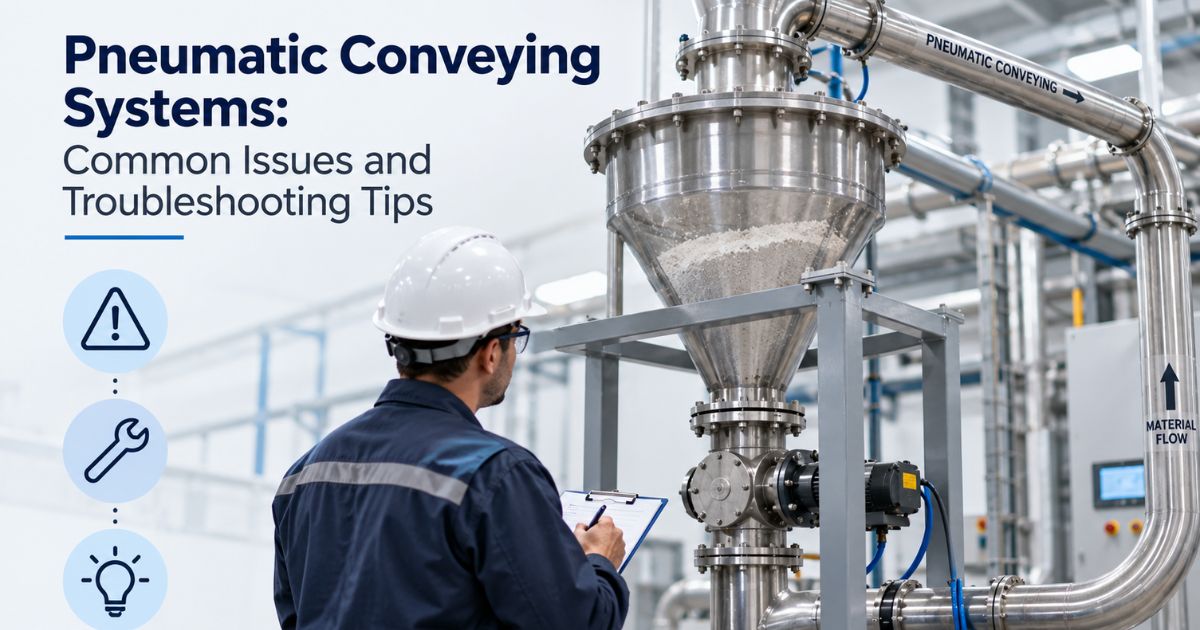
At Orchid Material Handling Solutions, we design and engineer customized pneumatic conveying solutions for the safe and efficient transfer of powders, granules, and bulk solids. In our experience, even a well-designed conveying system can develop performance issues when material characteristics, airflow, feeding conditions, or production requirements change.
A sudden drop in conveying capacity, frequent pipeline blockages, excessive dust, abnormal pressure, or rising energy consumption should not be ignored. These symptoms often indicate an underlying issue that can be identified and corrected with systematic troubleshooting.
This guide covers the most common pneumatic conveying problems, their possible causes, and practical troubleshooting steps to help operators and maintenance teams improve system reliability and reduce unplanned downtime.
What Are the Most Common Pneumatic Conveying Problems?
Most pneumatic conveying issues can be traced to one or more of these areas:
- Pipeline blockages
- Low or inconsistent conveying capacity
- Excessive pressure drop
- Material degradation
- High energy consumption
- Excessive dust or leakage
- Irregular material feeding
- Pipeline and component wear
- Blower, compressor, or vacuum-source problems
The important point is that one symptom can have several possible causes. For example, a pipeline blockage may result from low air velocity, excessive material loading, moisture, poor feeding, or an unsuitable conveying configuration.
Pneumatic Conveying Troubleshooting Guide
| Problem | Possible Cause | What to Check |
| Pipeline blockage | Low air velocity or excessive material loading | Airflow, pressure and feed rate |
| Low conveying capacity | Insufficient airflow or inconsistent feeding | Air mover, feeder and pipeline |
| High pressure drop | Material buildup or pipeline resistance | Bends, filters and pipeline |
| Product degradation | Excessive conveying velocity | Air velocity and conveying phase |
| High energy consumption | Excessive pressure or airflow | Blower/compressor and system settings |
| Excessive dust | Leakage or filtration issues | Seals, joints and filters |
| Irregular material flow | Bridging or poor feeding | Hopper, feeder and material condition |
| Pipeline wear | Abrasive material or high velocity | Bends, pipe walls and operating conditions |
Let’s look at these issues in more detail.
1. Why Does a Pneumatic Conveying Pipeline Get Blocked?
A blocked pipeline is one of the most disruptive problems in pneumatic material conveying. Once material settles inside the pipeline, conveying can stop completely and production may be affected.
Common Causes of Pipeline Blockage
A blockage can occur because of:
- Insufficient conveying velocity
- Excessive material loading
- Moisture or material buildup
- Poor feeding conditions
- Incorrect pipeline sizing
- Sudden changes in operating conditions
- Material settling in horizontal sections
How Can You Troubleshoot a Blockage?
Start by checking whether the system is maintaining the required airflow and pressure.
Also inspect:
- Blower, compressor, or vacuum source
- Material feeding equipment
- Pipeline bends
- Filters
- Material moisture and flowability
- Recent changes in production rate
If blockages repeatedly occur at the same location, we recommend investigating the pipeline configuration and operating conditions rather than simply clearing the blockage each time.
2. Why Is My Pneumatic Conveying System Losing Capacity?
If the system is no longer achieving its expected throughput, the problem may not necessarily be with the pipeline.
Possible causes include:
- Insufficient airflow
- Incorrect material feed rate
- Changes in bulk density
- Feeder malfunction
- Pipeline leakage
- Filter restriction
- Incorrect operating pressure
Compare the current operating conditions with the original design parameters. If the material, production rate, or conveying distance has changed, the existing system may also require an engineering review.
3. What Causes High Pressure Drop in Pneumatic Conveying?
Pressure drop represents the resistance encountered by conveying air as it moves through the system.
An unexpected increase can indicate:
- Material buildup
- Partial blockage
- Excessive pipeline length
- Too many bends
- Filter loading
- Incorrect pipe diameter
- Air leakage
Monitoring pressure at different points can help identify where resistance is developing.
If pressure drop gradually increases during operation, inspect the pipeline and filtration system before simply increasing the blower or compressor output.
4. How Can You Prevent Product Degradation?
Not every material responds well to high conveying velocities. Fragile food ingredients, pharmaceutical powders, plastic pellets, and certain other bulk solids can experience breakage, attrition, or changes in particle characteristics when conveyed too aggressively.
What Can Cause Product Degradation?
Common factors include:
- Excessive air velocity
- Incorrect conveying phase
- Too many bends
- Poorly designed transfer points
- Excessive impact within the conveying line
If product quality is being affected, review the conveying velocity and overall system configuration.
For suitable applications, dense-phase pneumatic conveying can be considered when lower conveying velocity and gentler material handling are priorities.
5. Why Is Pneumatic Conveying Consuming Too Much Energy?
Pneumatic conveying systems can become energy-intensive when they operate outside their optimum conditions.
High energy consumption may result from:
- Excessive air velocity
- Oversized blower or compressor
- High pipeline pressure losses
- Air leakage
- Dirty or overloaded filters
- Incorrect operating settings
Reducing airflow blindly is not the solution. If velocity falls below the required conveying condition, material may settle and create blockages.
The objective should be to achieve the required material throughput with the appropriate combination of airflow, pressure, and conveying velocity.
6. What Causes Excessive Dust in a Pneumatic Conveying System?
Dust control is especially important when handling powders in food, pharmaceutical, nutraceutical, chemical, and other processing facilities.
Excessive dust can result from:
- Leaking pipeline connections
- Damaged seals
- Poorly sealed equipment
- Filter failure
- Inadequate dust extraction
- Excessive material turbulence
Inspect pipeline joints, seals, filters, receiving equipment, and discharge points regularly.
Where the application requires additional dust control, an appropriate industrial dust filtration solution can be integrated into the material handling process.
7. Why Is Material Feeding Becoming Irregular?
A pneumatic conveying system can only perform consistently when material enters the conveying line at a controlled and predictable rate.
Irregular feeding may be caused by:
- Material bridging
- Rat-holing
- Poor hopper design
- Moisture
- Inconsistent material properties
- Feeder malfunction
For powders and bulk solids, we recommend checking the feeding arrangement along with the conveying system.
Depending on the application, suitable powder handling equipment can help address material flow and feeding challenges.
8. What Causes Excessive Pipeline Wear?
Pipeline wear is particularly important when conveying abrasive materials.
Minerals, certain chemicals, and other abrasive bulk solids can gradually wear the inside of pipelines, especially around bends and high-impact areas.
How Can Pipeline Wear Be Reduced?
Consider:
- Optimizing conveying velocity
- Selecting appropriate pipeline materials
- Reviewing bend geometry
- Using wear-resistant components where required
- Monitoring high-wear areas periodically
The appropriate solution depends on the abrasiveness of the material and the operating conditions.
9. What If the Blower or Compressor Is Not Performing Properly?
The air mover is effectively the driving force behind a pneumatic conveying system. Any reduction in its performance can affect the entire conveying process.
Check for:
- Abnormal vibration
- Unusual operating noise
- Pressure fluctuations
- Reduced airflow
- Increased operating temperature
- Filter restrictions
- Motor or drive issues
If the air supply is inconsistent, we recommend checking the air-moving equipment before making major changes elsewhere in the system.
How Should You Troubleshoot a Pneumatic Conveying System?
Rather than changing several operating parameters simultaneously, follow a structured approach.
Start With the Exact Symptom
First identify what has changed.
Is it:
- Lower conveying capacity?
- Higher pressure?
- More dust?
- Product degradation?
- Frequent blockage?
- Higher energy consumption?
Check Recent Changes
Look for changes in:
- Material
- Production rate
- Material moisture
- Operating hours
- Pipeline configuration
- Equipment settings
- Upstream or downstream equipment
A system that previously operated reliably may behave differently after a process or material change.
Check Airflow and Pressure
Verify whether the blower, compressor, or vacuum source is delivering the required operating conditions.
Check Material Feeding
Inspect the feeder, hopper, valves, and material flow.
Inspect the Pipeline
Check for:
- Blockages
- Material buildup
- Leakage
- Worn sections
- Damaged bends
This systematic approach helps identify the underlying cause instead of repeatedly treating the visible symptom.
When Should a Pneumatic Conveying System Be Redesigned?
Routine maintenance can solve many operational problems, but sometimes the system itself needs to be reviewed.
An engineering assessment may be required when:
- Production capacity has increased significantly
- The material being conveyed has changed
- Blockages continue despite maintenance
- Energy consumption remains high
- Product degradation is persistent
- The existing pipeline no longer matches the process
- New storage, mixing, or packaging equipment has been added
In these situations, changing individual components without reviewing the complete conveying system may only provide a temporary improvement.
How Does Pneumatic Conveying Fit Into a Complete Material Handling Process?
Pneumatic conveying is often one part of a larger bulk material handling system.
Depending on the application, it may work alongside:
- Bulk material storage solutions
- Industrial mixing equipment
- Weighing and batching systems
- Bulk bag unloading equipment
- Bag filling systems
- Dust filtration equipment
- Industrial automation and control systems
Looking at the complete material flow can help determine whether a conveying problem originates within the pneumatic system itself or from upstream and downstream processes.
Why Choose Orchid Material Handling Solutions?
At Orchid Material Handling Solutions, we approach pneumatic conveying from an application and engineering perspective. Our team evaluates material characteristics, required throughput, conveying distance, pipeline configuration, air velocity, pressure requirements, and plant layout before recommending a suitable solution.
Depending on the application, we can engineer Pressure Conveying, Vacuum Conveying, Dense Phase, and Dilute Phase Pneumatic Conveying Systems for different powder and bulk solid handling requirements.
Our solutions can also be integrated with storage, feeding, weighing, batching, mixing, dust filtration, filling, and automation systems to create a coordinated material handling process.
If your pneumatic conveying system is experiencing recurring blockages, inconsistent material flow, excessive dust, or rising operating costs, our recommendation is to evaluate the underlying process and system conditions rather than addressing individual symptoms in isolation.
Frequently Asked Questions
Pipeline blockages can result from low conveying velocity, excessive material loading, moisture, material buildup, feeder problems, or unsuitable pipeline design. The actual cause should be identified before changing system parameters.
Reduced capacity can be caused by insufficient airflow, feeder problems, pipeline leakage, filter restrictions, increased material loading, or changes in material properties.
Start by identifying restrictions such as material buildup, excessive bends, an unsuitable pipeline diameter, dirty filters, or air leakage. The complete system should be evaluated before increasing blower or compressor capacity.
Excessive conveying velocity, repeated impacts, and unsuitable conveying configurations can contribute to product degradation. Optimizing velocity and evaluating the conveying phase can help, and dense-phase conveying may be considered for suitable sensitive materials.
High airflow, excessive pressure losses, air leakage, dirty filters, or an incorrectly sized air mover can increase energy consumption. Optimizing the system around actual material and production requirements can improve efficiency.
Consider an engineering review when production requirements or material characteristics have changed, or when recurring blockages, high energy consumption, product degradation, or inconsistent conveying performance continue despite routine maintenance.
Yes. Orchid Material Handling Solutions can evaluate the material, throughput, conveying distance, pipeline configuration, air requirements, and operating conditions to identify potential causes of performance issues and recommend appropriate system improvements.