- sales@orchidmhs.com
- +91 9322487698
- +91 7028807698
- ISO 9001:2015

How Pneumatic Conveying Systems Improve Hygiene and Safety in Pharma Manufacturing
11 Jan 2026
Pharmaceutical manufacturing operates under some of the strictest hygiene and safety standards in the world. Every gram of material, every transfer point, and every process step must meet regulatory requirements while protecting product integrity and worker safety. In such an environment, material handling is not just a support function. It is a critical compliance driver.
Choosing the right pneumatic conveying setup depends on several factors such as powder characteristics, hygiene requirements, throughput expectations, and facility layout. Pharmaceutical manufacturers increasingly rely on powder transfer system solutions that offer enclosed handling, controlled transfer, and easy validation to meet strict regulatory standards. When these systems are engineered specifically for pharma-grade applications, they not only improve safety and cleanliness but also integrate smoothly with existing processing and packaging lines.
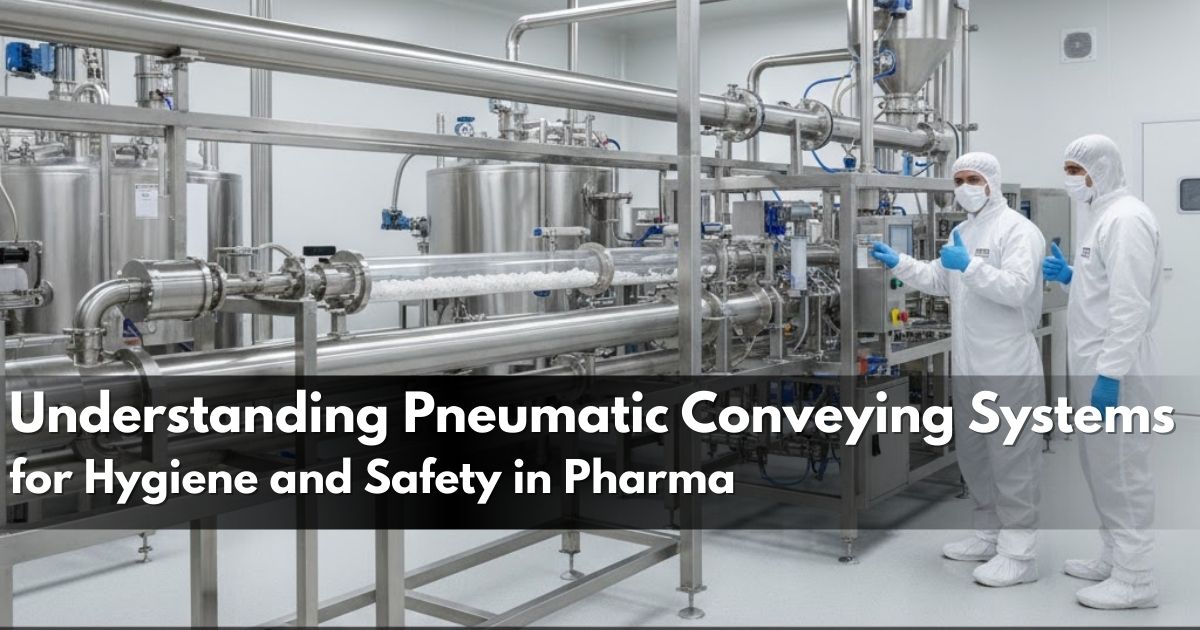
Among the various material handling technologies used in pharma plants, pneumatic conveying systems have become a preferred solution for moving powders and granules safely and hygienically. Their enclosed design, controlled operation, and minimal human contact make them especially suitable for pharmaceutical applications.
This article explains how pneumatic conveying systems improve hygiene and safety in pharma manufacturing and why they are increasingly considered a best practice across the industry.
Understanding Pneumatic Conveying in Pharma Manufacturing
Pneumatic conveying is a method of transporting powders or bulk solids through pipelines using air or gas as the conveying medium. Instead of relying on mechanical movement such as belts or screws, materials are carried through enclosed pipes under controlled pressure or vacuum.
In pharmaceutical plants, this approach is widely used to move active pharmaceutical ingredients, excipients, intermediates, and finished blends between process stages. The enclosed nature of the system plays a key role in meeting hygiene and safety expectations.
Why Hygiene Is a Critical Concern in Pharmaceutical Handling
Pharmaceutical products are highly sensitive to contamination. Even small exposure to airborne particles, moisture, or human contact can compromise product quality and patient safety.
Traditional open handling methods increase the risk of contamination at transfer points. Spillage, dust release, and manual intervention introduce variables that are difficult to control consistently.
Hygiene in pharma manufacturing is not only about cleanliness. It also involves repeatability, traceability, and the ability to validate and document every step of material movement.
How Pneumatic Conveying Systems Improve Hygiene
1. Fully Enclosed Material Transfer
- One of the most important hygiene benefits of pneumatic conveying systems is their enclosed design. Materials move through sealed pipelines from source to destination without exposure to the surrounding environment.
- This prevents airborne contaminants from entering the product stream and eliminates the risk of external particles settling on materials during transfer. It also reduces cross-contamination between different products handled within the same facility.
2. Minimal Human Contact
- Manual handling introduces variability and contamination risks. Even with protective gear, repeated human interaction increases exposure.
- Pneumatic conveying systems significantly reduce the need for manual material transfer. Once the system is set up, materials move automatically through pipelines with minimal operator involvement. This controlled handling supports higher hygiene standards and consistent compliance across shifts.
3. Reduced Dust Generation
- Dust is a major concern in pharmaceutical plants. Airborne powder not only poses contamination risks but also creates safety hazards and cleaning challenges.
- Because pneumatic conveying systems operate within sealed pipelines, dust generation is kept to a minimum. Properly designed intake and discharge points further prevent dust escape. This cleaner environment supports both product quality and regulatory compliance.
4. Easy Cleaning and Validation
- Pharma manufacturing requires frequent cleaning and validation, especially during product changeovers. Equipment that is difficult to clean increases downtime and validation complexity.
- Pneumatic conveying pipelines are designed with smooth internal surfaces and minimal dead zones. This makes them easier to clean and inspect. Many systems support clean-in-place processes, allowing thorough cleaning without disassembly.
How Pneumatic Conveying Enhances Safety in Pharma Plants
1. Protection Against Operator Exposure
- Many pharmaceutical materials can be hazardous if inhaled or handled directly. Manual handling exposes operators to powders that may be toxic, allergenic, or reactive.
- By transporting materials in sealed pipelines, pneumatic conveying systems reduce direct exposure. This protects workers from inhalation risks and skin contact while improving overall workplace safety.
2. Controlled Handling of Sensitive Materials
- Pharmaceutical powders often have specific handling requirements related to particle size, electrostatic behavior, or moisture sensitivity.
- Pneumatic conveying systems allow precise control over conveying parameters such as air velocity and pressure. This reduces material degradation, segregation, and uncontrolled dispersion, improving both safety and product consistency.
3. Lower Risk of Spillage and Accidents
- Open handling methods increase the likelihood of spillage, slipping hazards, and accidental exposure. These risks grow as production volumes increase.
- Pneumatic conveying eliminates many of these hazards by keeping materials contained throughout the transfer process. Fewer spills lead to safer walkways and reduced cleanup requirements.
4. Support for Explosion and Static Control Measures
- Certain pharmaceutical powders can be combustible under specific conditions. Static electricity and dust accumulation increase explosion risks.
- Modern pneumatic conveying systems are designed with grounding, bonding, and explosion protection features. These safety measures reduce the risk of static buildup and help meet plant safety standards.
Role of Pneumatic Conveying in Regulatory Compliance
Pharmaceutical manufacturing must comply with strict regulatory guidelines related to hygiene, safety, and traceability. Pneumatic conveying systems support compliance by offering controlled, documented, and repeatable material handling processes.
Pharmaceutical manufacturing must comply with strict regulatory guidelines related to hygiene, safety, and traceability. Pneumatic conveying systems support compliance by offering controlled, documented, and repeatable material handling processes.
Experienced solution providers such as Orchid Material Handling design pneumatic conveying systems that align with pharmaceutical regulatory expectations while fitting seamlessly into existing production environments.
Choosing the Right Pneumatic Conveying System for Pharma Applications
Not all pneumatic conveying systems are the same. Selecting the right system depends on material characteristics, required throughput, hygiene standards, and facility layout.
Vacuum conveying is often preferred in pharma applications due to its containment benefits and lower risk of material escape. Dense phase or dilute phase conveying may be chosen based on material sensitivity and flow behavior.
A thorough evaluation of product properties and process requirements ensures the system delivers both safety and performance.
Conclusion
In pharmaceutical manufacturing, hygiene and safety cannot be compromised. Material handling systems must support strict regulatory requirements while maintaining efficiency and scalability.
Pneumatic conveying systems in pharmaceutical manufacturing offer a reliable solution by providing enclosed, controlled, and low-contact material transfer. They reduce contamination risks, protect workers, simplify cleaning, and support compliance with industry standards.
When implemented correctly, pneumatic conveying transforms material handling from a potential risk into a strong foundation for safe and hygienic pharma production.