- sales@orchidmhs.com
- +91 9322487698
- +91 7028807698
- ISO 9001:2015


How Automated Bag Filling Systems Improve Accuracy, Speed and Workplace Safety
23 Jan 2026
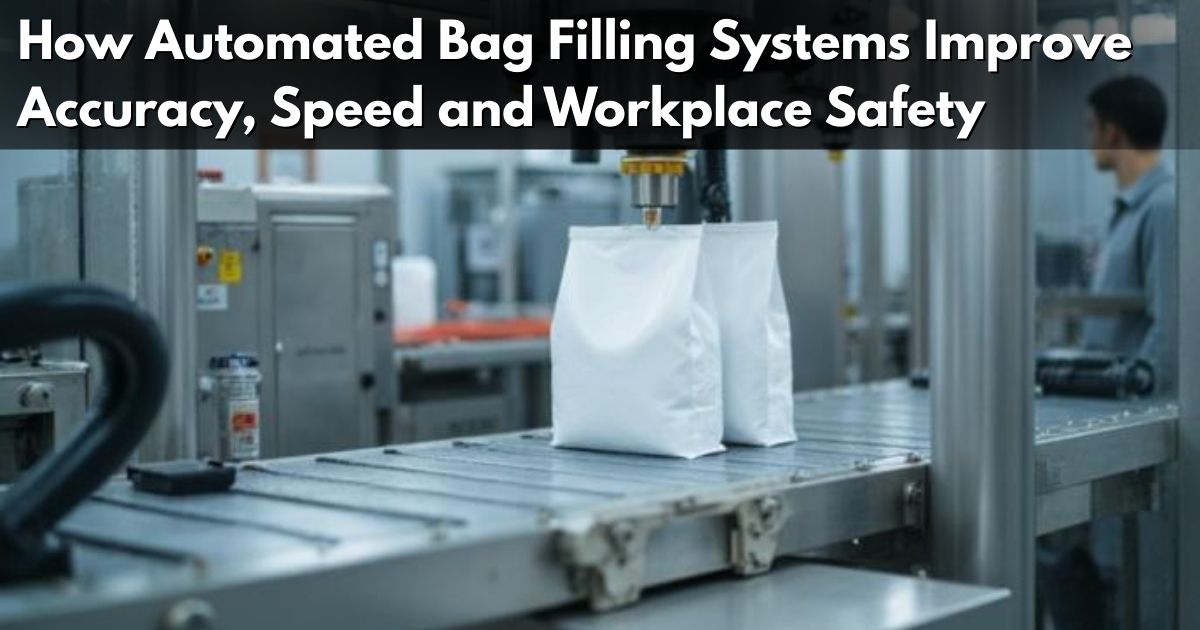
In manufacturing environments where powders, granules, and bulk solids are packaged daily, bag filling is a critical operation. It directly affects product quality, production speed, labor efficiency, and workplace safety. Yet, in many facilities, bag filling is still handled manually or with semi-automated setups that struggle to meet modern production demands.
Automated bag filling systems are designed to solve these challenges by bringing precision, consistency, and safety into the packaging process. As production volumes grow and quality standards become stricter, automation in bag filling is no longer a luxury. It has become a practical necessity.
This article explains how automated bag filling systems improve accuracy, increase speed, and create safer working environments across industries.
Understanding Automated Bag Filling Systems
Automated bag filling systems are engineered solutions that fill bags with precise quantities of material using controlled weighing, feeding, and discharge mechanisms. These systems handle tasks such as bag positioning, filling, weight verification, and sometimes sealing, with minimal operator intervention.
They are widely used for packaging powders, grains, pellets, and other bulk materials in industries such as food processing, chemicals, agriculture, pharmaceuticals, and construction materials.
By replacing manual handling with controlled automation, these systems bring stability and predictability to the packaging stage of production.
Improving Accuracy Through Automation
1. Precise Weighing and Controlled Filling
- One of the biggest advantages of automated bag filling systems is their ability to deliver accurate and repeatable fill weights. Manual filling often relies on operator judgment, which leads to overfilling or underfilling.
- Automated systems use load cells, sensors, and programmed controls to measure material precisely. Each bag is filled according to predefined weight targets, reducing variations and ensuring compliance with packaging standards.
2. Reduction in Product Giveaway
- Overfilling may seem harmless, but across thousands of bags, it leads to significant product loss. Automated bag filling systems minimize this giveaway by maintaining tight weight tolerances.
- Accurate filling not only protects profit margins but also improves inventory tracking and batch consistency.
Increasing Production Speed and Throughput
1. Faster and Continuous Operation
- Manual bag filling limits production speed due to physical constraints and operator fatigue. Automated systems operate at consistent speeds throughout shifts, allowing higher output without compromising accuracy.
- Continuous operation ensures predictable production schedules and reduces delays caused by manual intervention.
2. Reduced Changeover Time
- Modern automated bag filling systems are designed for flexibility. Adjustments for different bag sizes or materials can be made quickly through control settings.
- This reduces downtime during product changeovers and allows manufacturers to respond faster to changing production demands.
Enhancing Workplace Safety
1. Minimizing Manual Lifting and Strain
- Bag filling often involves heavy lifting, repetitive movements, and awkward postures. These tasks increase the risk of musculoskeletal injuries and long-term health issues for workers.
- Automated bag filling systems significantly reduce physical strain by handling most of the lifting and positioning tasks. Operators shift from manual labor to system supervision, creating a safer and more sustainable work environment.
2. Dust Control and Cleaner Workspaces
- Bag filling can generate significant dust, especially when handling fine powders. Airborne dust poses inhalation risks and increases housekeeping challenges.
- Automated systems are typically integrated with dust extraction and containment features. Controlled filling and enclosed discharge points reduce dust release, improving air quality and cleanliness on the production floor.
3. Lower Risk of Human Error and Accidents
- Manual bag handling increases the likelihood of spillage, slips, and accidental exposure to materials. Automation reduces these risks by limiting direct human interaction with the material flow.
- Consistent, machine-controlled operations create safer and more predictable workflows.
Improving Process Consistency and Quality Control
Automated bag filling systems support consistent packaging quality across batches and shifts. Every bag is filled using the same parameters, regardless of operator or time of day.
Integrated monitoring systems track fill weights, cycle times, and performance metrics. This data improves traceability, supports quality audits, and helps identify process improvements.
Consistency at the packaging stage strengthens overall production reliability.
Supporting Scalability and Long-Term Growth
As production demand increases, manual bag filling becomes a bottleneck. Scaling output with manual labor often leads to higher costs and safety risks.
Automated bag filling systems scale more effectively. Additional capacity can be achieved through system upgrades or parallel lines without disrupting existing operations. Manufacturers seeking long-term efficiency often adopt jumbo bag filing system solutions that handle larger volumes while maintaining precision and safety.
Integration with Upstream and Downstream Systems
Automated bag filling systems integrate smoothly with upstream conveying and storage equipment as well as downstream palletizing and warehousing systems.
This integration improves material flow across the facility and eliminates inefficiencies caused by disconnected processes. When packaging aligns with upstream production rates, overall efficiency improves significantly.
Providers like Orchid Material Handling design bag filling systems that fit seamlessly into broader material handling ecosystems.
Conclusion
Automated bag filling systems deliver measurable improvements in accuracy, speed, and workplace safety. By reducing manual intervention, controlling material flow, and ensuring precise filling, these systems help manufacturers improve productivity while protecting both products and people.
For facilities aiming to optimize packaging operations and prepare for future growth, automated bag filling is not just an upgrade. It is a strategic investment in efficiency, quality, and safety.