- sales@orchidmhs.com
- +91 9322487698
- +91 7028807698
- ISO 9001:2015


Choosing the Right Bulk Material Handling System for Your Industry
01 Feb 2026
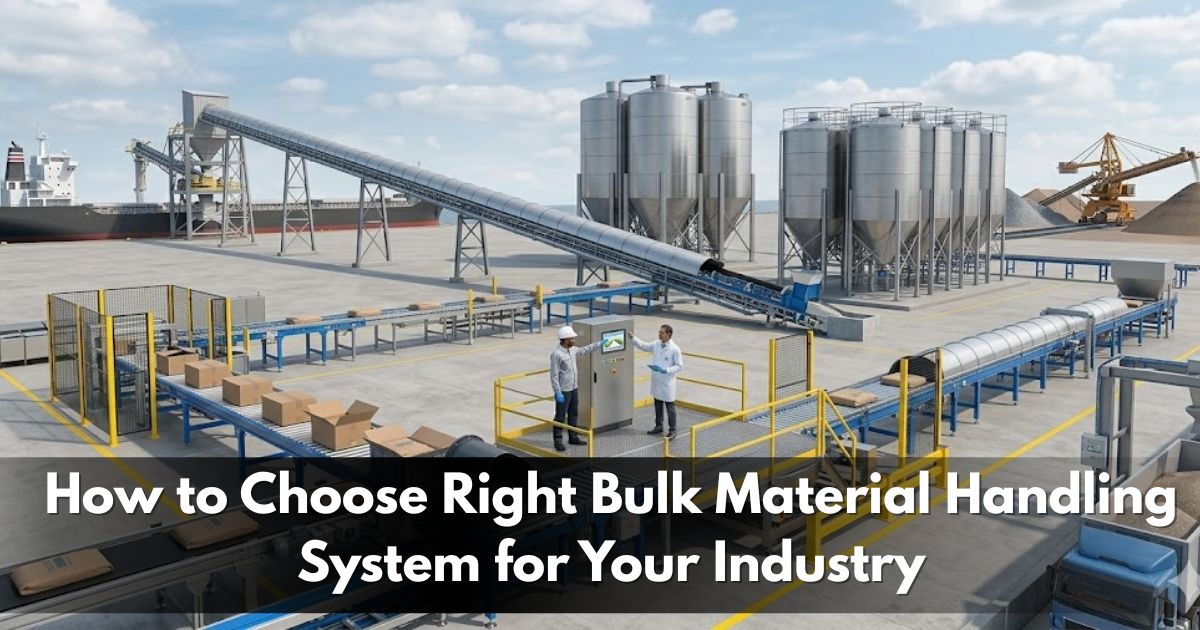
Choosing a bulk material handling system is one of the most important decisions in any industrial setup. The system you select directly affects production efficiency, material loss, safety, maintenance costs, and long-term scalability. A wrong choice may work initially but often leads to frequent breakdowns, dust issues, bottlenecks, or high operating costs over time.
This guide is written to help manufacturers, plant managers, and project teams clearly understand how to choose the right bulk material handling system based on industry needs, material behavior, and operational goals, rather than relying on generic equipment recommendations.
Why Bulk Material Handling System Selection Matters
Bulk materials such as powders, granules, pellets, and aggregates behave very differently from packaged goods. They can flow unpredictably, generate dust, absorb moisture, segregate, or degrade if not handled correctly.
A well-designed bulk material handling system ensures:
- Consistent material flow across the process
- Minimal material loss and spillage
- Improved workplace safety
- Lower maintenance and downtime
Because every industry handles different materials under different conditions, there is no universal solution. The right system depends on multiple technical and operational factors.
Step 1: Understand Your Material Characteristics
The first and most critical step is understanding the material itself. Bulk material behavior determines the type of system required.
Key Material Properties to Evaluate
- Particle size and shape
- Flowability and cohesiveness
- Dust generation tendency
- Moisture sensitivity
- Abrasiveness or corrosiveness
- Bulk density and weight
For example, free-flowing granules may work well with simple conveyor systems, while fine powders often require enclosed handling and dust control.
Step 2: Define Your Industry-Specific Requirements
Different industries prioritize different outcomes from their material handling systems.
Industry Considerations at a Glance
| Industry | Primary Concerns |
| Food Processing | Hygiene, contamination control, easy cleaning |
| Pharmaceuticals | Containment, safety, validation, traceability |
| Chemicals | Dust control, corrosion resistance, operator safety |
| Cement & Minerals | Heavy loads, abrasion resistance, continuous flow |
| Packaging & Manufacturing | Speed, consistency, integration with machines |
Understanding these priorities helps narrow down system choices early.
Step 3: Choose the Right Material Handling Method
Bulk material handling systems generally fall into a few core categories. Each serves a different purpose.
Conveyor-Based Systems
Used for continuous and predictable material movement.
Best suited for:
- Medium to high throughput
- Fixed routes within a plant
- Granules, powders, bags, and bulk solids
Common examples include belt conveyors and roller conveyors used in traditional material handling setups.
Pneumatic Conveying Systems
Used for enclosed transport of powders and fine materials.
Best suited for:
- Dust-sensitive materials
- Long or complex routing
- Hygienic and contained environments
Often used in pharma, food, and chemical applications.
Bag Handling and Feeding Systems
Used where materials are received in bags.
Best suited for:
- Manual or semi-automatic feeding
- Controlled material introduction into the process
- Dust containment during bag emptying
These systems are common at the start of production lines.
Storage and Discharge Systems
Used to manage material buffering and controlled feeding.
Best suited for:
- Managing batch consistency
- Reducing production interruptions
- Supporting continuous downstream processes
Includes hoppers, silos, and controlled discharge units.
Step 4: Evaluate Layout and Space Constraints
Plant layout plays a major role in system selection. Even the best handling system fails if it does not fit the available space or workflow.
Key layout questions include:
- Is the plant greenfield or brownfield?
- Are there space limitations or height restrictions?
- Does material need to change direction frequently?
- How many transfer points are acceptable?
Simpler layouts often support conveyor-based systems, while complex layouts may require more flexible or enclosed handling solutions.
Step 5: Consider Safety, Dust, and Environmental Factors
Bulk material handling systems must protect both workers and the surrounding environment.
Important Safety and Compliance Factors
- Dust exposure and air quality
- Risk of spillage and slip hazards
- Fire or explosion risks
- Noise levels
- Regulatory compliance requirements
Systems with poor dust control or excessive manual handling often create long-term safety and compliance challenges.
Step 6: Think Beyond Initial Cost
One of the most common mistakes is choosing a system based only on upfront cost. Bulk material handling systems should be evaluated over their full lifecycle.
Cost Factors to Consider
- Installation and commissioning
- Energy consumption
- Maintenance frequency
- Spare part availability
- Downtime impact
- Material loss over time
A slightly higher initial investment often results in lower operating costs and better reliability.
Step 7: Match the System to Your Industry Use Case
Example Decision Mapping
| Requirement | Preferred System Approach |
| High dust control | Enclosed or pneumatic systems |
| Heavy bulk materials | Robust conveyor systems |
| Hygienic processing | Enclosed and easy-to-clean systems |
| High throughput | Continuous conveyor-based systems |
| Frequent product change | Flexible and modular systems |
This mapping helps eliminate unsuitable options early.
Step 8: Importance of System Integration
Bulk material handling systems rarely operate in isolation. They must integrate smoothly with upstream and downstream equipment.
Good integration ensures:
- Consistent feeding to production machines
- Reduced bottlenecks
- Better automation and monitoring
- Improved process stability
Engineering-focused solution providers like Orchid Material Handling design systems as part of the overall process flow rather than standalone equipment.
Common Mistakes to Avoid When Selecting a System
- Choosing based only on price
- Ignoring material behavior testing
- Underestimating dust and safety risks
- Overcomplicating simple applications
- Not planning for future capacity expansion
Avoiding these mistakes saves both time and long-term operational costs.
Final Checklist Before Making a Decision
Before finalizing a bulk material handling system, ensure you have clarity on:
- Material properties and behavior
- Industry-specific compliance needs
- Plant layout constraints
- Required throughput and scalability
- Maintenance and skill availability
A structured evaluation leads to a system that performs reliably over the long term.
Conclusion
Choosing the right bulk material handling system is a strategic decision that goes far beyond equipment selection. It requires understanding materials, industry needs, layout constraints, and long-term operational goals.
When the system is aligned with these factors, it improves efficiency, reduces losses, enhances safety, and supports sustainable growth. With the right engineering approach and industry understanding, bulk material handling becomes a competitive advantage rather than an operational challenge.