- sales@orchidmhs.com
- +91 9322487698
- +91 7028807698
- ISO 9001:2015



Send us a message to get a call back.
Importance of Dust Collection Systems in Chemical and Powder Processing Industries
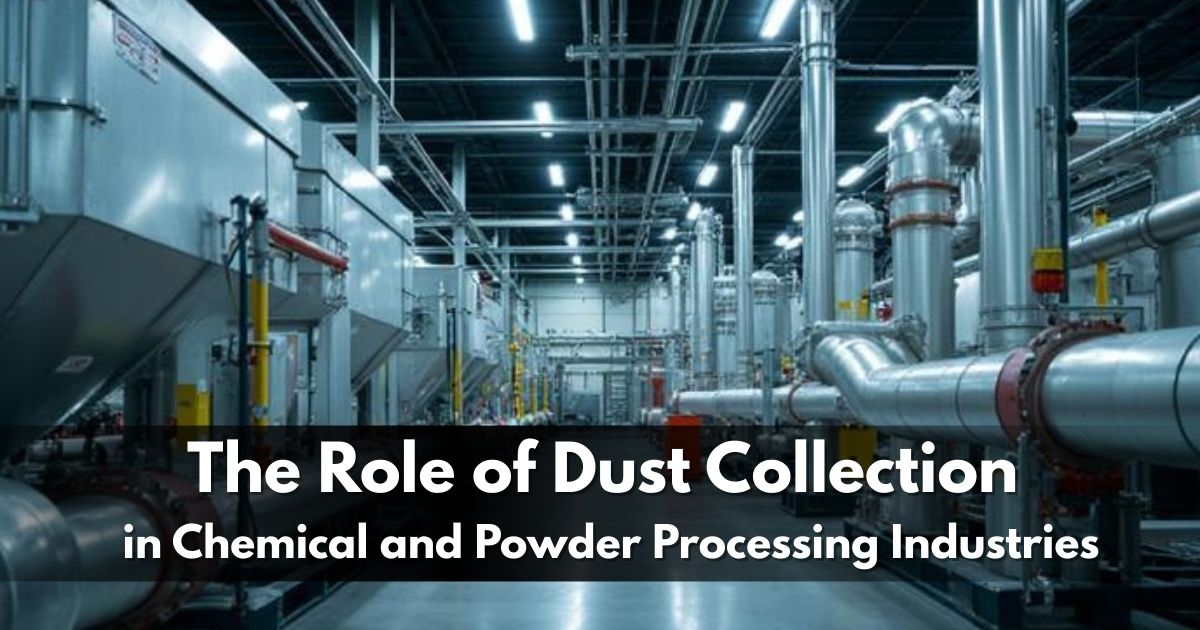
In chemical and powder processing industries, dust is more than just a housekeeping issue. It directly impacts product quality, worker safety, regulatory compliance, and overall operational efficiency. Fine particles released during processing can contaminate products, damage equipment, and create serious health and safety risks if left uncontrolled.
Dust collection systems play a critical role in managing these challenges. They help maintain clean production environments, protect employees, and ensure smooth, uninterrupted operations. As manufacturing processes become more complex and production volumes increase, effective dust control is no longer optional. It is a core requirement for sustainable and compliant operations.
Understanding Dust Generation in Chemical and Powder Processing
Chemical and powder processing involves handling materials that are inherently prone to dust generation. Activities such as mixing, conveying, bag dumping, grinding, and packaging all release fine particles into the air.
These particles vary in size, density, and behaviour. Some remain suspended for long periods, while others settle on equipment and surfaces. Certain chemical powders may also be toxic, corrosive, or combustible, making uncontrolled dust especially dangerous.
Without proper dust collection systems, these particles spread across the facility, creating operational and safety challenges that escalate over time.
Why Dust Control Is Critical in These Industries
Dust may seem insignificant at first, but its impact can be severe when ignored. In chemical and powder processing plants, uncontrolled dust affects operations in multiple ways.
First, it compromises product quality by introducing contamination. Second, it increases health risks for workers who may inhale fine particles regularly. Third, it raises the likelihood of equipment failure due to dust accumulation in motors, sensors, and control panels.
In some environments, dust also creates explosion and fire hazards. This makes effective dust collection essential for both compliance and risk management.
Role of Dust Collection Systems in Maintaining Workplace Safety
1. Protecting Worker Health
- Fine dust particles can enter the respiratory system and cause long-term health problems. Chemical powders may also irritate skin or eyes upon contact.
- Dust collection systems capture airborne particles at the source before they spread through the facility. By reducing exposure, these systems help create safer working conditions and lower the risk of occupational illnesses.
2. Preventing Fire and Explosion Hazards
- Certain powders and chemical dusts are combustible when dispersed in air. If ignited, they can cause fires or explosions with devastating consequences.
- Properly designed dust collection systems help prevent dangerous dust concentrations from forming. When combined with grounding, bonding, and explosion protection measures, they significantly reduce safety risks.
3. Improving Product Quality and Process Consistency
- Dust contamination can alter product composition, especially in chemical formulations that require precise ratios. Even small variations can affect performance, stability, or regulatory acceptance.
- By removing airborne particles from the environment, dust collection systems help maintain clean processing zones. This improves consistency, reduces batch rejection, and supports high quality standards across production cycles.
4. Enhancing Equipment Performance and Longevity
- Dust build up inside equipment leads to overheating, abrasion, and premature wear. Sensors and moving parts become less reliable when exposed to fine particles.
- Dust collection systems protect equipment by keeping critical components clean. This reduces maintenance frequency, extends equipment lifespan, and minimizes unexpected downtime that disrupts production schedules.
5. Supporting Regulatory Compliance
- Chemical and powder processing industries are subject to strict regulations related to workplace safety, environmental emissions, and product quality. Dust control is a key component of these requirements.
- Effective dust collection systems help meet compliance standards by maintaining acceptable air quality levels and reducing environmental emissions. Documented dust control measures also simplify audits and inspections.
Types of Dust Collection Systems Used in Processing Industries
Dust collection systems vary based on material characteristics, dust volume, and process requirements.
Baghouse collectors are commonly used for handling large dust volumes. Cartridge collectors are suitable for finer particles and compact installations. Cyclone separators are often used as pre-filters to remove heavier particles before fine filtration.
Selecting the right system ensures efficient dust capture without disrupting production flow.
Choosing the Right Dust Collection System
Selecting a dust collection system requires understanding the nature of the dust being generated. Particle size, toxicity, moisture content, and explosiveness all influence system design.
Airflow requirements, filter efficiency, ease of maintenance, and space availability should also be considered. Manufacturers aiming for long-term performance often look for the best dust collector that balances efficiency, safety, and operational reliability rather than focusing only on initial cost.
Solution providers such as Orchid Material Handling design dust collection systems that integrate seamlessly with existing processes while addressing industry-specific challenges.
Long-Term Benefits of Effective Dust Collection
Investing in dust collection systems delivers benefits beyond immediate dust control. Cleaner facilities improve employee morale and productivity. Reduced product loss and equipment wear lower operational costs. Safer environments reduce liability and downtime caused by incidents.
Over time, effective dust collection becomes a foundation for sustainable growth and operational excellence.
Conclusion
Dust collection systems are essential in chemical and powder processing industries. They protect workers, preserve product quality, improve equipment reliability, and support regulatory compliance.
As production demands increase and safety standards evolve, investing in the right dust collection solution is a strategic decision. With proper design and implementation, dust collection systems transform dust from a constant challenge into a manageable and controlled aspect of industrial operations.