- sales@orchidmhs.com
- +91 9322487698
- +91 7028807698
- ISO 9001:2015



Send us a message to get a call back.
Material Handling in Modern Manufacturing: Types, Equipment, Workflow & Best Practices
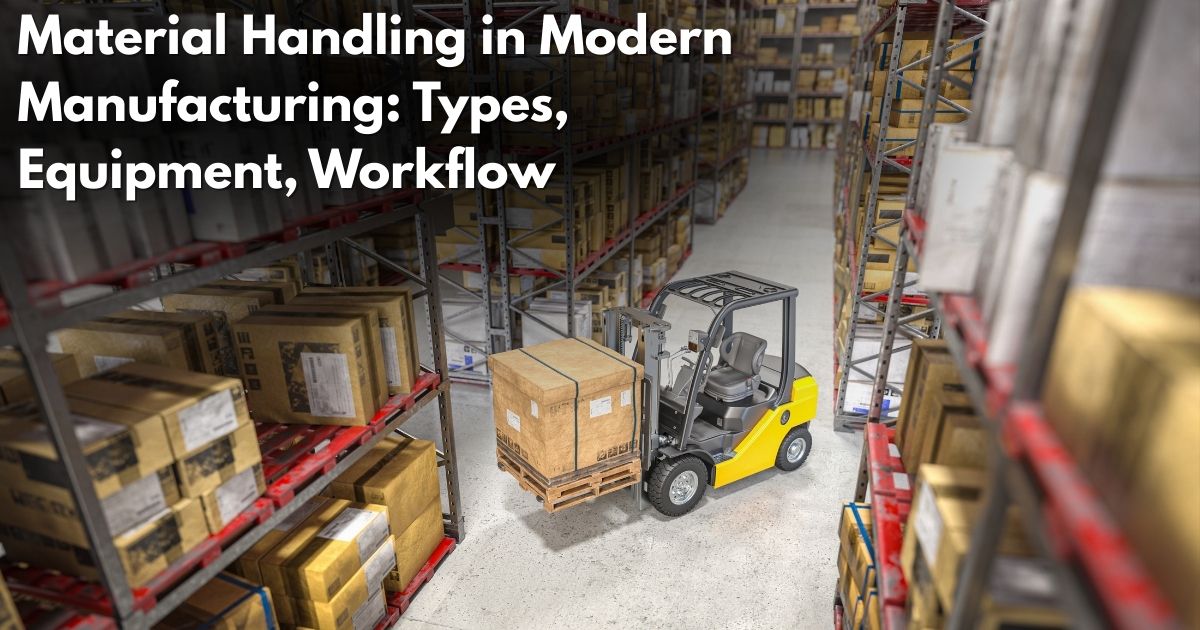
In modern manufacturing, material handling plays a far bigger role than most people realize. It quietly controls how raw materials enter a facility, how efficiently production flows, how safe employees remain on the shop floor, and how quickly finished products reach customers. When material handling systems are thoughtfully planned, manufacturing becomes smoother, faster, and more predictable. When ignored or poorly designed, even the best production lines struggle.
This guide breaks down material handling in a practical and easy-to-understand way, covering its types, equipment, workflows, and proven best practices used in modern manufacturing environments.
Understanding Material Handling in Manufacturing
Material handling refers to the systematic movement, storage, protection, and control of materials throughout the manufacturing process. This starts the moment raw materials arrive at the facility and continues until finished goods are shipped out.
Material handling refers to the systematic movement, storage, protection, and control of materials throughout the manufacturing process. This starts the moment raw materials arrive at the facility and continues until finished goods are shipped out.
In modern manufacturing, material handling is closely tied to lean manufacturing, automation, and digital monitoring systems.
Why Material Handling Is Critical in Modern Manufacturing
Manufacturing today operates under constant pressure. Customers expect faster delivery, product variety is increasing, and margins are tighter than ever. Material handling supports all of these demands in several important ways.
First, it reduces unnecessary movement. Excess travel time, repeated lifting, and poorly planned storage layouts waste both labor and time. Second, it improves workplace safety by reducing manual lifting and exposure to hazardous movements. Third, it ensures production continuity. When materials reach the right place at the right time, machines remain productive and downtime is minimized.
As factories adopt automation and data-driven decision making, material handling has become a strategic function rather than a background activity.
1. Types of Material Handling in Manufacturing
- Material handling methods are generally divided into manual and mechanical handling. Most modern facilities use a combination of both.
2. Manual Material Handling
- Manual handling relies on human effort to move or position materials. This includes lifting, carrying, pushing, pulling, or positioning items using basic tools.
- Manual handling is commonly used for lightweight items, small batch production, or tasks that require flexibility. However, it increases the risk of worker fatigue and injury if not properly managed. Over time, excessive manual handling also slows down operations and leads to inconsistent productivity.
- Because of these risks, manufacturers aim to limit manual handling to only where it truly makes sense.
3. Mechanical Material Handling
- Mechanical handling uses machines and equipment to move materials with minimal human effort. This approach improves speed, consistency, and safety.
- Mechanical handling is essential for high-volume manufacturing, heavy materials, and repetitive workflows. It allows manufacturers to scale operations while maintaining control over quality and costs.
- Mechanical handling is essential for high-volume manufacturing, heavy materials, and repetitive workflows. It allows manufacturers to scale operations while maintaining control over quality and costs.
Key Material Handling Equipment Used in Manufacturing
Key Material Handling Equipment Used in Manufacturing
1. Conveyors
- Conveyors are one of the most widely used material handling systems in manufacturing. They move materials along a fixed path using belts, rollers, or chains.
- Conveyors are ideal for continuous production lines where materials move between workstations at a consistent pace. They reduce manual effort, improve workflow predictability, and help maintain uniform production speed across departments.
2. Automated Guided Vehicles (AGVs)
- AGVs are self-guided vehicles that transport materials without human drivers. They follow predefined paths using sensors, magnetic strips, or vision systems.
- AGVs are particularly effective in repetitive and high-frequency movement tasks. They improve safety by reducing collisions and ensure consistent material delivery across large facilities.
3. Robotic Handling Systems
- Robotic arms are increasingly used for tasks that require precision and repeatability. This includes palletizing, packaging, welding, and assembly assistance.
- Robotic systems reduce errors, maintain consistent output, and operate continuously without fatigue. When integrated properly, they significantly improve throughput.
Material Handling Workflow in Manufacturing
A structured material handling workflow ensures smooth movement of materials across the facility.
1. Receiving and Inspection
- Materials arrive at the facility and are inspected for quality and quantity. Any discrepancies are addressed before materials enter storage or production.
2. Storage and Inventory Placement
- Materials are stored in designated areas based on usage frequency and handling requirements. Efficient storage layout reduces retrieval time and minimizes congestion.
3. Retrieval and Internal Transport
- Materials are moved from storage to production areas using forklifts, conveyors, or AGVs. Clear pathways and scheduling prevent delays and accidents.
4. Production Flow Handling
- During production, materials move between workstations. This stage requires careful synchronization to avoid bottlenecks and idle machines.
5. Finished Goods Handling
- Completed products are transferred to packaging and finished goods storage. Proper handling prevents damage and maintains product quality.
6. Shipping and Dispatch
- Final products are picked, packed, and loaded for shipment. Accuracy and speed at this stage directly affect customer satisfaction.
Best Practices for Effective Material Handling
1. Focus on Worker Safety
- Safety should be the foundation of every material handling strategy. This includes ergonomic equipment, proper lifting methods, and continuous safety training. A safer workplace reduces injuries, absenteeism, and operational disruptions.
2. Standardize Material Handling Processes
- Standard operating procedures ensure consistency across shifts and teams. Clearly defined handling paths, load limits, and equipment usage guidelines prevent confusion and errors.
3. Use Automation Where It Adds Real Value
- Automation should be applied to tasks that are repetitive, time-consuming, or physically demanding. Thoughtful automation improves efficiency without disrupting flexibility. Providers like Orchid Material Handling help manufacturers implement solutions that align with actual operational needs rather than forcing generic systems.
4. Monitor Performance and Optimize Continuously
- Tracking material movement data provides valuable insights. Metrics such as handling time, equipment utilization, and error rates help identify improvement opportunities and support informed decision-making.
5. Design for Lean and Just-In-Time Manufacturing
- Reducing excess inventory and unnecessary movement improves cash flow and space utilization. Lean material handling ensures materials arrive only when needed, reducing clutter and delays.
Common Material Handling Challenges and Solutions
Many manufacturers struggle with excessive manual handling, inefficient layouts, and disconnected systems. These issues often lead to delays, safety risks, and rising costs.
The solution lies in proper planning, realistic automation adoption, and integration between material handling systems and digital platforms such as ERP or warehouse management systems.
The Future of Material Handling in Manufacturing
Material handling is evolving rapidly with the adoption of smart technologies. Artificial intelligence, connected sensors, predictive maintenance, and autonomous systems are shaping the next generation of manufacturing facilities.
Manufacturers that invest early in intelligent material handling systems gain better visibility, faster response times, and long-term operational resilience.
Conclusion
Material handling is not just a support function in manufacturing. It directly influences productivity, safety, and profitability. By choosing the right equipment, designing efficient workflows, and following proven best practices, manufacturers can build operations that scale smoothly and remain competitive.
With thoughtful planning and the right expertise, material handling becomes a powerful driver of operational excellence rather than a hidden bottleneck.