- sales@orchidmhs.com
- +91 9322487698
- +91 7028807698
- ISO 9001:2015


What Are the Safety Considerations for a Pneumatic Conveying System
13 Feb 2026
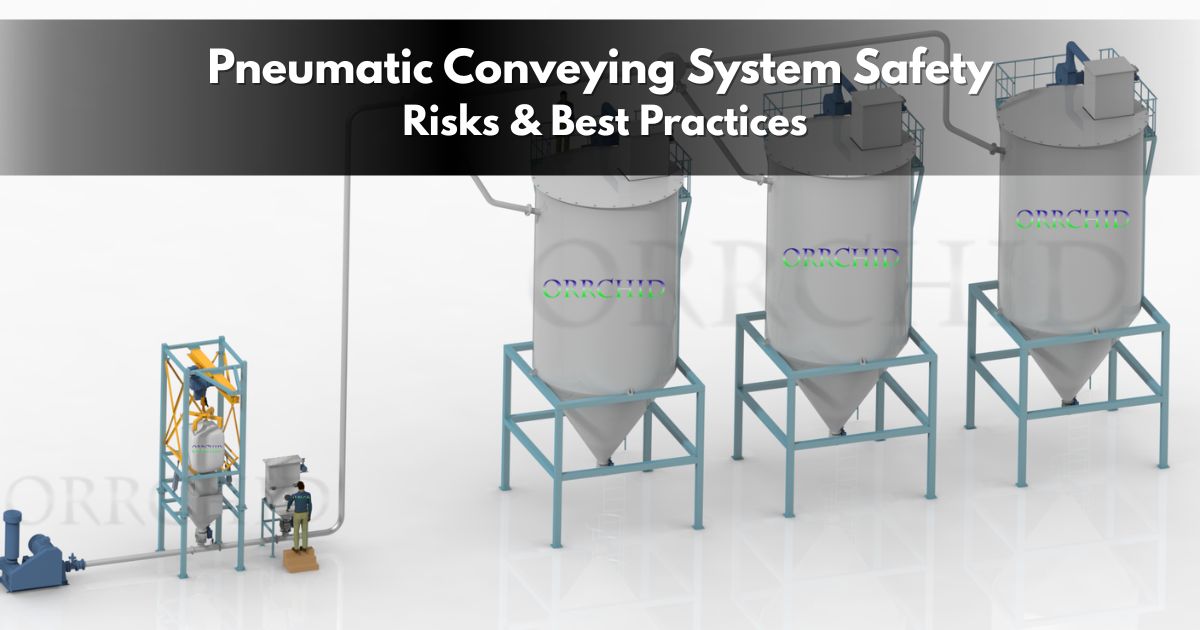
Pneumatic conveying systems are widely preferred for handling powders and bulk solids because they offer enclosed, dust-free material transport. However, enclosure alone does not automatically guarantee safety. If safety considerations are not addressed at the design and operational stages, pneumatic conveying systems can pose serious risks to workers, equipment, and the facility.
This article focuses specifically on safety considerations, not maintenance or performance. It explains the key risks associated with pneumatic conveying and the measures required to control them across different industries.
Why Safety Is a Critical Aspect of Pneumatic Conveying
Pneumatic conveying systems operate using air pressure or vacuum to move materials at high velocities. This combination of air, material, and pressure creates unique safety challenges that are different from mechanical conveying systems.
Safety risks in pneumatic conveying system are often hidden because the system is enclosed. Issues such as dust explosions, static buildup, overpressure, or material release may not be visible until an incident occurs. Addressing safety proactively is essential to prevent accidents rather than reacting after failures.
1. Dust Explosion and Fire Risk
One of the most serious hazards in pneumatic conveying systems is the risk of dust explosions.
Why This Risk Exists
Many powders handled in pneumatic systems are combustible. When fine dust particles are suspended in air at the right concentration, they can ignite if exposed to a spark or heat source.
Safety Considerations
- Identify whether the conveyed material is combustible or explosive
- Control dust concentration within safe limits
- Use explosion venting, suppression, or isolation systems where required
- Design the system to avoid dust accumulation zones
Industries handling organic powders, chemicals, or fine particulates must treat explosion prevention as a primary safety requirement.
2. Electrostatic Charge and Grounding Risks
Material movement through pipelines generates friction, which can lead to electrostatic charge buildup.
Why This Is Dangerous
Static discharge can act as an ignition source in combustible dust environments. Even small sparks are enough to trigger explosions under the right conditions.
Safety Considerations
- Ensure proper grounding and bonding of pipelines, equipment, and receivers
- Use conductive or anti-static materials where required
- Avoid insulating materials that allow charge buildup
Static control is especially critical in dry environments and high-velocity conveying systems.
3. Overpressure and System Integrity Risks
Pneumatic conveying systems operate under pressure or vacuum. Any blockage, valve malfunction, or improper control can result in excessive pressure buildup.
Potential Hazards
- Pipeline rupture
- Sudden release of material
- Equipment damage
- Risk of injury to nearby personnel
Safety Considerations
- Install pressure relief devices and safety valves
- Monitor pressure continuously through sensors
- Design pipelines and vessels to withstand maximum operating pressure
Overpressure protection is a fundamental design requirement, not an optional add-on.
4. Operator Exposure and Material Containment
Even though pneumatic systems are enclosed, exposure risks still exist at loading, discharge, and inspection points.
Common Exposure Scenarios
- Manual feeding of materials
- Opening receivers or filters
- Clearing blockages
Safety Considerations
- Use sealed feed and discharge interfaces
- Minimize manual intervention wherever possible
- Provide appropriate personal protective equipment for operators
- Design access points with containment in mind
Reducing human interaction with conveyed material significantly improves safety outcomes.
5. Noise and Occupational Health Risks
Pneumatic conveying systems can generate high noise levels due to air movement, blowers, and discharge operations.
Safety Considerations
- Evaluate noise levels during system design
- Use silencers and acoustic enclosures where needed
- Protect operators working near high-noise equipment
Long-term exposure to excessive noise can lead to hearing damage and reduced workplace comfort.
6. Material Compatibility and Chemical Safety
Not all materials behave safely when conveyed pneumatically.
Risks Involved
- Chemical reactions due to friction or heat
- Degradation of sensitive materials
- Corrosion of pipelines and components
Safety Considerations
- Assess chemical compatibility of materials and system components
- Select appropriate pipeline materials and linings
- Avoid conveying conditions that alter material properties
Understanding material behavior under pneumatic conditions is essential for safe system operation.
7. Safe System Design and Layout
Safety starts at the design stage. Poor layout decisions often introduce long-term safety risks.
Design-Related Safety Considerations
- Avoid sharp bends that increase wear and blockage risk
- Ensure clear access for emergency intervention
- Separate high-risk zones from regular work areas
- Label pipelines and flow directions clearly
A well-designed system reduces the likelihood of unsafe operating conditions.
8. Emergency Handling and Failure Scenarios
Despite preventive measures, failures can still occur. Preparing for emergencies is a key safety requirement.
Safety Considerations
- Define clear emergency shutdown procedures
- Train operators on abnormal condition response
- Install alarms for pressure, flow, and system faults
- Ensure safe depressurization mechanisms
Emergency preparedness reduces the severity of incidents when they occur.
9. Regulatory and Compliance Considerations
Many industries operate under strict safety regulations related to dust handling, air quality, and explosion prevention.
Safety Considerations
- Follow applicable industrial safety standards and guidelines
- Document safety measures and system design decisions
- Conduct risk assessments before commissioning
Compliance is not only a legal requirement but also a practical framework for safer operations.
10. Importance of Training and Operational Discipline
Even the safest system becomes risky if operators are not trained properly.
Safety Considerations
- Train operators on system behavior and limitations
- Educate teams on hazards specific to pneumatic conveying
- Encourage reporting of abnormal conditions
Human awareness and discipline play a major role in overall system safety.
Conclusion
Pneumatic conveying systems offer many safety advantages, but they also introduce unique risks related to dust, pressure, static electricity, and material behavior. Addressing these risks requires a combination of proper system design, hazard identification, containment strategies, and operator awareness.
When safety considerations are built into the system from the beginning, pneumatic conveying becomes a reliable and secure solution for handling bulk materials across industries. Safety is not a separate feature. It is an integral part of effective pneumatic conveying system design and operation.