- sales@orchidmhs.com
- +91 9322487698
- +91 7028807698
- ISO 9001:2015

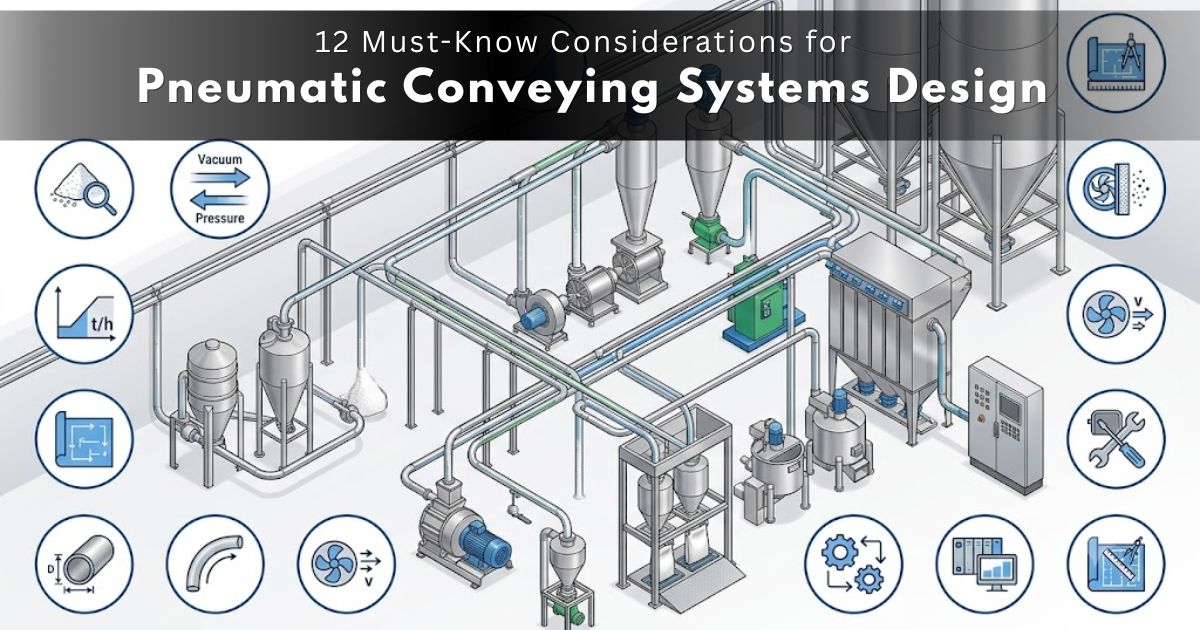
12 Must-Know Considerations forPneumatic Conveying Systems Design
22 Jul 2026
At Orchid Material Handling Solutions, we design customized Pneumatic Conveying Systems that are engineered around the material, process, and production requirements—not a one-size-fits-all approach.
Moving powders, granules, and bulk solids efficiently is about much more than installing pipelines and blowers. A well-designed pneumatic conveying system can improve production efficiency, reduce product loss, maintain product quality, and lower operating costs. On the other hand, poor system design can result in frequent blockages, excessive wear, material degradation, and unnecessary downtime.
Whether you’re designing a new manufacturing facility or upgrading an existing production line, understanding the key design considerations can help you select a system that performs reliably for years.
Let’s look at the 12 factors every user should consider before investing in a pneumatic conveying system.
Understand Your Material Characteristics
Every powder behaves differently.
Before selecting a conveying system, it’s important to evaluate:
- Bulk density
- Particle size
- Moisture content
- Abrasiveness
- Flowability
- Fragility
For example, fine pharmaceutical powders require gentle handling, while abrasive minerals demand wear-resistant components.
A system designed without considering material properties often results in inconsistent conveying and increased maintenance.
Select the Right Conveying Method
Not every application requires the same type of pneumatic conveying.
The most common options include:
Vacuum Conveying
Suitable for:
- Food processing
- Pharmaceuticals
- Nutraceuticals
Benefits:
- Dust-free operation
- Hygienic transfer
- Gentle product handling
Pressure Conveying
Ideal for:
- Cement
- Chemicals
- Plastic granules
- Minerals
Benefits:
- Longer conveying distances
- Higher capacities
- Faster transfer rates
Choosing the wrong conveying method can increase energy consumption and reduce system efficiency.
Calculate the Required Conveying Capacity
A common mistake is designing only for today’s production.
Instead, evaluate:
- Hourly throughput
- Peak production demand
- Future expansion plans
- Batch vs continuous production
Designing with scalability in mind helps avoid expensive modifications later.
Consider the Conveying Distance & Plant Layout
The routing of pipelines significantly affects system performance.
Design should consider:
- Horizontal distance
- Vertical lifts
- Number of bends
- Available installation space
- Future equipment additions
A simplified pipeline layout generally delivers better efficiency and lower maintenance.
Choose the Right Pipeline Diameter
Pipeline size directly impacts:
- Air velocity
- Material flow
- Pressure drop
- Energy consumption
A pipeline that’s too small may create blockages, while one that’s too large can reduce conveying efficiency.
Proper sizing ensures smooth and reliable material transport.
Minimize Pipeline Bends
Every bend introduces friction and pressure loss.
Excessive bends can cause:
- Product degradation
- Material accumulation
- Increased wear
- Higher operating costs
Using long-radius bends and optimized routing improves system reliability.
Control Air Velocity
Air is the driving force behind every pneumatic conveying system.
However, excessive velocity isn’t always better.
High air velocity may lead to:
- Particle breakage
- Product segregation
- Increased pipe wear
- Higher energy costs
The ideal velocity depends entirely on the material being conveyed.
Focus on Dust Control & Workplace Safety
Industrial dust affects more than housekeeping.
It can impact:
- Worker safety
- Product contamination
- Equipment performance
- Regulatory compliance
An enclosed pneumatic conveying system, combined with Dust Air Filtration Systems, helps create a cleaner and safer manufacturing environment.
Plan for Easy Maintenance
A reliable system should also be easy to maintain.
Consider:
- Inspection points
- Access doors
- Replaceable wear parts
- Easy cleaning
- Preventive maintenance access
Reducing maintenance time directly improves plant productivity.
Integrate with Existing Equipment
Pneumatic conveying should work as part of the entire production process.
Many facilities integrate conveying systems with:
- Bulk Storage Systems
- Industrial Mixers
- Weighing & Batching Systems
- Bag Filling Systems
- Industrial Control Panels
- Powder Handling Accessories
A well-integrated system improves automation while reducing manual intervention.
Prioritize Automation & Process Monitoring
Modern manufacturing relies heavily on automation.
Features such as:
- PLC controls
- HMI & scada interfaces
- Recipe management
- Alarm systems
- Real-time monitoring
allow manufacturers to improve consistency while minimizing operator dependency.
Automation also simplifies troubleshooting and production tracking.
Work with an Experienced System Designer
Buying individual equipment is easy.
Designing a complete, efficient material handling system is where expertise matters.
A trusted engineering partner evaluates:
- Material properties
- Process flow
- Capacity requirements
- Future expansion
- Plant layout
- Energy efficiency
This ensures every component works together seamlessly instead of operating as isolated equipment.
At Orchid Material Handling Solutions, every Pneumatic Conveying System is designed through a consultative engineering approach to match your production goals and long-term operational requirements.
Why Choosing the Right Pneumatic Conveying Design Matters
A thoughtfully engineered pneumatic conveying system delivers benefits far beyond material transportation.
It helps manufacturers:
- Improve production efficiency
- Reduce product loss
- Minimize downtime
- Maintain product quality
- Lower operating costs
- Enhance workplace safety
- Support future production expansion
Investing time in proper system design today can prevent costly operational challenges tomorrow.
Why Manufacturers Choose Orchid Material Handling Solutions
With over 18 years of experience in bulk material handling, Orchid Material Handling Solutions designs customized pneumatic conveying systems for industries including food processing, pharmaceuticals, nutraceuticals, chemicals, plastics, minerals, and fertilizers.
Rather than offering standard equipment, Orchid engineers evaluate user requirement & offered technically proven system.Orchid Material Handling has complete material handling solutions by integrating Pneumatic Conveying Systems, Industrial Mixers, Bulk Storage Systems, Weighing & Batching Systems, Powder Handling Accessories, Bag Filling Systems, Dust Air Filtration Systems, and Industrial Control Panels into one efficient production workflow.
Whether you’re building a new facility or modernizing an existing plant, Orchid helps you design systems that are reliable, scalable, and built for long-term performance.
Frequently Asked Questions
Material properties, conveying distance, capacity, air velocity, pipeline layout, automation requirements, and future scalability are the key design considerations.
Designing the system without fully understanding the material characteristics or future production requirements.
Food processing, pharmaceuticals, chemicals, plastics, minerals, cement, nutraceuticals, and fertilizer manufacturing.
Optimize pipeline routing, control air velocity, select the right conveying method, and integrate the system with complementary equipment such as storage, mixing, and batching solutions.
Orchid provides customized pneumatic conveying solutions backed by engineering expertise, process analysis, and complete system integration to help manufacturers improve productivity, product quality, and operational efficiency.