- sales@orchidmhs.com
- +91 9322487698
- +91 7028807698
- ISO 9001:2015


12+ Types of Material Handling Equipment and Their Uses
03 Feb 2026
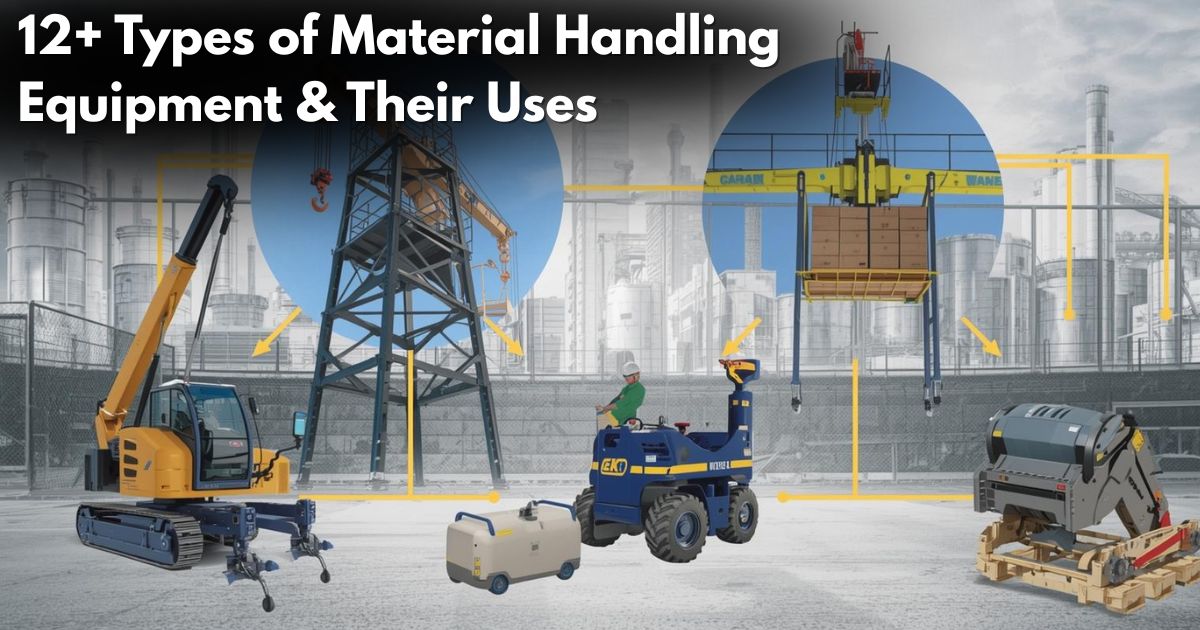
Material handling equipment forms the backbone of industrial operations. From moving raw materials to handling finished goods, the right equipment ensures smooth workflows, reduced manual effort, improved safety, and consistent production output.
However, not all material handling equipment serves the same purpose. Each type is designed to handle specific materials, loads, and operational conditions. Understanding these differences helps industries choose equipment that fits their process instead of forcing processes to fit the equipment.
This guide explains the most common types of material handling equipment, how they work, and where they are typically used.
What Is Material Handling Equipment
Material handling equipment refers to machines and systems used to move, store, control, and protect materials throughout manufacturing, warehousing, processing, and distribution operations.
These materials may include powders, granules, bulk solids, bags, pallets, cartons, or finished products. The equipment selected directly impacts efficiency, safety, and operating costs.
Broad Categories of Material Handling Equipment
Before diving into individual types, it helps to understand the four main categories:
- Conveying equipment for continuous movement
- Lifting and positioning equipment for vertical or controlled movement
- Storage and buffering equipment for holding materials
- Automated and system-based equipment for integrated operations
Most industrial setups use a combination of these categories.
1. Belt Conveyors
Belt conveyors are among the most widely used material handling systems. They consist of a continuous belt that moves materials from one point to another.
Uses:
Belt conveyors are commonly used to transport bulk materials, bags, cartons, and packaged goods over short to long distances. They are suitable for manufacturing plants, food processing units, cement plants, and packaging lines.
2. Roller Conveyors
Roller conveyors use cylindrical rollers to move items, either by gravity or powered mechanisms.
Uses:
They are ideal for handling unit loads such as boxes, crates, and bags in warehouses, assembly lines, and packaging areas. Roller conveyors are especially effective where items have a stable base.
3. Screw Conveyors
Screw conveyors move material using a rotating helical screw inside a trough or tube.
Uses:
They are widely used for powders, grains, cement, and fine materials where controlled feeding and short-distance transfer are required. Screw conveyors are common in chemical, food, and cement industries.
4. Bucket Elevators
Bucket elevators are designed to move materials vertically using buckets attached to a belt or chain.
Uses:
They are ideal for lifting bulk materials such as grains, powders, pellets, and aggregates to higher levels. Bucket elevators are frequently used in silos, storage systems, and batching plants.
5. Pneumatic Conveying Systems
Pneumatic systems transport materials through pipelines using air pressure or vacuum.
Uses:
They are best suited for fine powders and granules that require enclosed, dust-free handling. Pneumatic conveying is commonly used in pharmaceutical, food, and chemical processing plants.
6. Hoists and Cranes
Hoists and cranes are used for lifting and positioning heavy loads vertically or horizontally.
Uses:
They are commonly used to handle machinery parts, heavy components, and bulk containers in manufacturing units, maintenance areas, and assembly shops.
7. Forklifts
Forklifts are mobile material handling vehicles used to lift and transport palletized loads.
Uses:
They are widely used in warehouses, loading docks, and distribution centers for moving pallets, containers, and heavy goods over short distances.
8. Pallet Jacks and Stackers
These are compact lifting tools designed for handling pallets in confined spaces.
Uses:
Pallet jacks and stackers are used in warehouses, retail storage areas, and small production units where forklifts may not be practical.
9. Bag Dump Stations
Bag dump stations allow operators to safely empty bags of material into a process line while controlling dust.
Uses:
They are commonly used at the start of production processes in food, pharmaceutical, and chemical industries where materials are received in bags.
10. Hoppers and Silos
Hoppers and silos are used for storing bulk materials and feeding them into downstream processes in a controlled manner.
Uses:
They are essential in bulk handling industries such as cement, chemicals, food processing, and minerals to maintain continuous production flow.
11. Automated Guided Vehicles (AGVs)
AGVs are self-guided vehicles that transport materials within a facility without human drivers.
Uses:
They are used in automated warehouses and manufacturing plants to move pallets, bins, and materials between workstations safely and efficiently.
12. Robotic Material Handling Systems
Robotic systems perform repetitive or precision-based handling tasks with minimal human intervention.
Uses:
They are commonly used for palletizing, depalletizing, packaging, sorting, and assembly operations where speed and accuracy are critical.
How to Choose the Right Material Handling Equipment
Selecting the right equipment depends on several factors:
- Type and behavior of material
- Required throughput
- Distance and direction of movement
- Safety and dust control requirements
- Available space and layout
- Level of automation needed
No single piece of equipment can handle all material handling needs. Most efficient facilities use a combination of systems designed to work together.
Common Mistakes to Avoid
- Choosing equipment based only on initial cost
- Ignoring material flow characteristics
- Over-automating simple processes
- Underestimating dust and safety requirements
- Not planning for future capacity expansion
Avoiding these mistakes helps ensure long-term efficiency and reliability.
Conclusion
Material handling equipment plays a critical role in the efficiency, safety, and scalability of industrial operations. Understanding the different types of equipment and their specific uses allows businesses to design systems that move materials smoothly while minimizing waste and downtime.
When material handling equipment is selected strategically and integrated properly, it becomes a strong foundation for consistent production and sustainable growth.