- sales@orchidmhs.com
- +91 9322487698
- +91 7028807698
- ISO 9001:2015


Understanding Bag Dump Stations: A Complete Guide for Dust-Free Material Feeding
14 Jan 2026
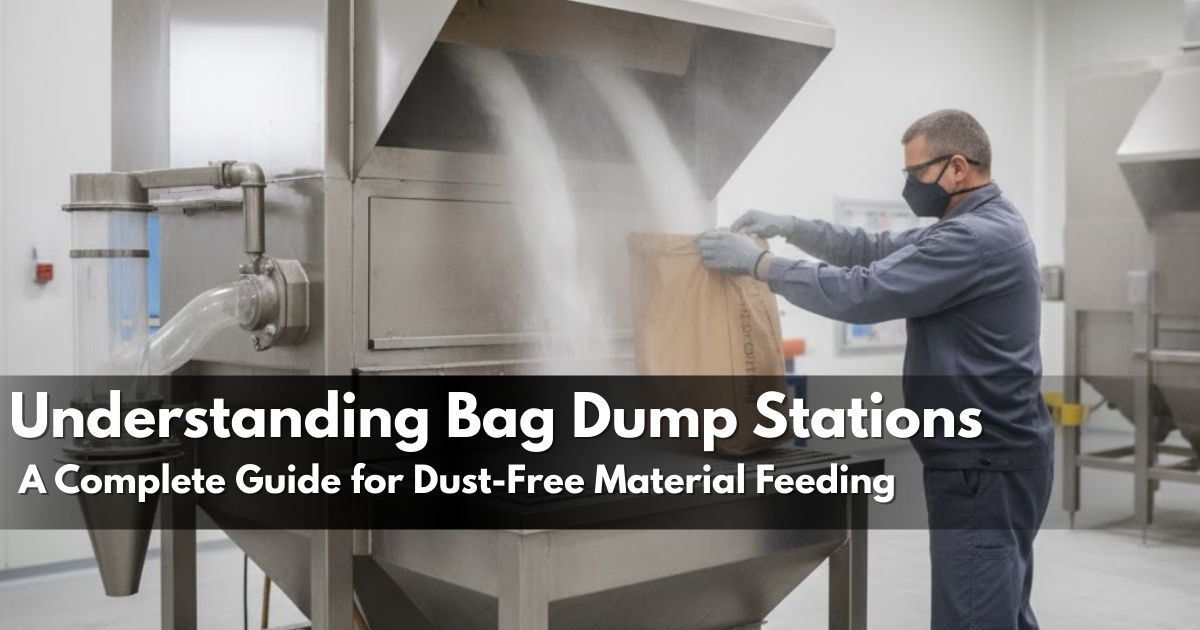
In many manufacturing environments, materials arrive in bags rather than bulk containers. These bags need to be opened, emptied, and fed into the production line without contaminating the product or the workspace. This is where bag dump stations play a critical role.
Bag dumping may sound like a simple task, but when handled incorrectly, it leads to excessive dust, product loss, operator exposure, and safety risks. Modern manufacturing demands cleaner, safer, and more controlled material feeding methods, especially in industries such as food processing, pharmaceuticals, chemicals, and plastics.
This guide explains what bag dump stations are, how they work, why they are essential, and how they help achieve dust-free material feeding.
What Is a Bag Dump Station
A bag dump station is a material handling system designed to allow operators to safely empty bags of powder or granular material into a process line. The system is built to control dust, protect operators, and ensure consistent material flow into downstream equipment.
Typically, a bag dump station includes a work platform, bag support grid, dust extraction system, and discharge outlet. The operator places the bag on the station, opens it, and empties the contents while the system captures airborne dust.
Bag dump stations are commonly used at the start of production lines where raw materials are introduced into mixers, conveyors, or storage systems.
Why Dust Control Is a Major Concern During Bag Dumping
Powder handling naturally generates dust. When bags are opened manually without proper control, fine particles become airborne and spread throughout the facility. This creates several serious issues.
Dust inhalation poses health risks to operators and can lead to long term respiratory problems. Settled dust contaminates surfaces, equipment, and products. In certain environments, dust accumulation also increases the risk of fires or explosions.
Dust-free material feeding is not just about cleanliness. It is about safety, compliance, and operational efficiency.
How Bag Dump Stations Enable Dust-Free Material Feeding
Bag dump stations are engineered to address the challenges of manual bag handling through controlled design and airflow management.
1. Enclosed Feeding Area
- Most bag dump stations provide a partially enclosed feeding zone. This limits the spread of dust during bag opening and emptying. The enclosure directs airborne particles toward the dust extraction system instead of allowing them to escape into the workspace.
- This controlled environment improves hygiene and reduces cleanup time significantly.
2. Integrated Dust Collection Systems
- A key component of any bag dump station is its dust extraction unit. As material is emptied from the bag, airborne dust is captured through filters or connected dust collectors.
- Clean air is released back into the facility while dust particles are contained and collected. This process ensures a safer and cleaner working environment without disrupting production.
3. Controlled Material Discharge
- Bag dump stations are designed to deliver material in a controlled manner into downstream equipment. Discharge outlets connect directly to conveyors, hoppers, or pneumatic conveying systems.
- This eliminates uncontrolled spillage and ensures smooth material flow into the next stage of processing.
Types of Bag Dump Stations
Bag dump stations are available in different configurations depending on material properties, production scale, and hygiene requirements.
1. Open Bag Dump Stations
- These are basic systems used where dust levels are low and materials are relatively free-flowing. They offer minimal enclosure and rely on local dust extraction.
- While cost-effective, they are best suited for non-hazardous materials and low throughput applications.
2. Enclosed Bag Dump Stations
- Enclosed systems provide better dust control and operator protection. They are widely used in food, pharmaceutical, and chemical plants where hygiene and safety are critical.
- These systems are designed for consistent use and higher production volumes.
3. Manual Bag Dump Stations
- A Manual bag dump station is designed for operations where bags are handled and emptied by operators without automated bag opening or disposal. These systems are commonly used in small to mid-scale production environments where flexibility is required.
- Despite being manually operated, modern designs still offer effective dust control and safe material feeding when properly engineered.
Key Benefits of Using Bag Dump Stations
1. Improved Operator Safety
- By controlling dust and reducing direct exposure to powders, bag dump stations protect workers from inhalation hazards and skin contact. Ergonomic designs also reduce physical strain during bag handling.
2. Enhanced Product Hygiene
- Dust containment prevents cross-contamination between materials and production areas. This is especially important in regulated industries where cleanliness standards are strictly enforced.
3. Reduced Material Loss
- Spillage during bag dumping leads to wasted raw materials and increased cleanup efforts. Bag dump stations minimize material loss by directing all contents into the process line efficiently.
4. Better Process Consistency
- Controlled feeding improves downstream process stability. When materials are fed consistently, mixing, conveying, and packaging operations perform more reliably.
5. Applications Across Industries
- Bag dump stations are widely used across multiple sectors.
- In food processing, they support hygienic handling of ingredients such as flour, sugar, and spices. In pharmaceutical manufacturing, they help maintain containment and compliance while handling active ingredients and excipients. Chemical and plastic industries rely on bag dump stations to manage powders safely while protecting both workers and equipment.
- Each industry benefits from the same core advantage: clean, controlled, and efficient material feeding.
Choosing the Right Bag Dump Station
Selecting the right bag dump station depends on several factors. These include material characteristics, dustiness, required throughput, available space, and integration with downstream equipment.
It is important to consider ease of cleaning, filter maintenance, and ergonomic design. Systems that are tailored to the specific process deliver better long term performance and compliance.
Solution providers such as Orchid Material Handling design bag dump stations that align with real production needs rather than generic assumptions.
Conclusion
Bag dump stations play a vital role in modern material handling systems. They transform a traditionally messy and hazardous task into a controlled, safe, and efficient operation.
By enabling dust-free material feeding, bag dump stations protect workers, improve hygiene, reduce waste, and support consistent production flow. For manufacturers handling bagged materials, investing in the right bag dump station is not just an operational upgrade. It is a step toward safer, cleaner, and more reliable manufacturing.