- sales@orchidmhs.com
- +91 9322487698
- +91 7028807698
- ISO 9001:2015


How Bulk Material Handling Systems Reduce Product Loss and Improve Production Efficiency
17 Jan 2026
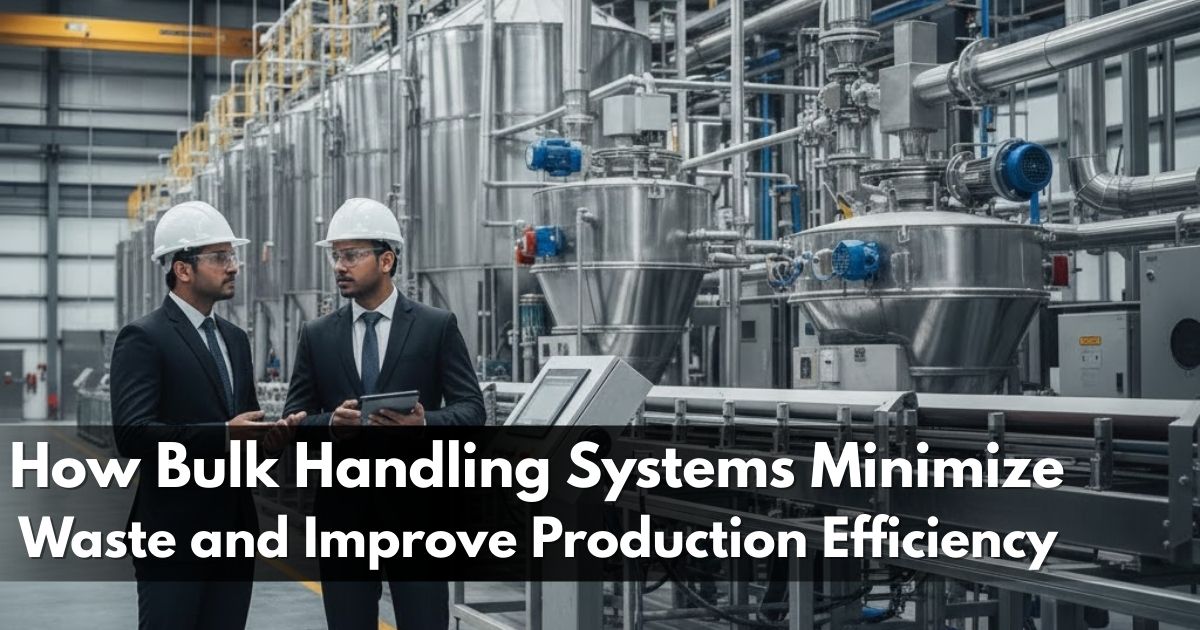
In high-volume manufacturing environments, even small inefficiencies can lead to significant losses over time. Bulk materials such as powders, granules, pellets, and aggregates are especially vulnerable to spillage, segregation, contamination, and inconsistent flow. When these issues occur repeatedly across shifts and production cycles, the impact on costs, productivity, and quality becomes impossible to ignore.
Bulk material handling systems are designed to address these challenges by creating controlled, efficient, and scalable methods for moving materials throughout a facility. When implemented correctly, they not only reduce product loss but also play a major role in improving overall production efficiency.
This article explains how bulk material handling systems achieve these results and why they are essential for modern manufacturing operations.
Understanding Bulk Material Handling in Manufacturing
Bulk material handling refers to the movement, storage, and control of large quantities of loose materials that are not packaged individually. These materials often flow freely and require specialized handling methods to maintain consistency and control.
Unlike unit loads, bulk materials behave unpredictably. They may compact, segregate, generate dust, or absorb moisture. Without proper systems in place, handling bulk materials manually or through poorly designed equipment increases waste and operational disruptions.
Modern bulk handling systems are engineered to manage these behaviors while supporting continuous production.
Why Product Loss Happens in Bulk Material Handling
Product loss in bulk handling operations often occurs gradually and unnoticed. Spillage at transfer points, dust escaping during movement, residue build One of the most effective ways bulk handling systems reduce product loss is through enclosed material transfer. Conveyors, pneumatic systems, and sealed chutes prevent materials from spilling or becoming airborne during movement.up in equipment, and inaccurate feeding all contribute to material loss.
In many plants, losses are accepted as unavoidable. However, most losses can be traced back to outdated handling methods, excessive manual intervention, or poorly integrated systems.
Reducing product loss starts with understanding where and how materials are being wasted during handling.
How Bulk Material Handling Systems Reduce Product Loss
1. Enclosed Material Transfer
- One of the most effective ways bulk handling systems reduce product loss is through enclosed material transfer. Conveyors, pneumatic systems, and sealed chutes prevent materials from spilling or becoming airborne during movement.
- One of the most effective ways bulk handling systems reduce product loss is through enclosed material transfer. Conveyors, pneumatic systems, and sealed chutes prevent materials from spilling or becoming airborne during movement.
2. Controlled Feeding and Discharge
- Uncontrolled feeding leads to overflows, surging, and inconsistent material flow. Bulk material handling systems are designed to regulate feed rates and discharge points precisely.
- Controlled feeding ensures that only the required amount of material enters the process at any given time. This accuracy reduces waste, improves batch consistency, and protects downstream equipment from overload.
3. Reduced Manual Handling
- Manual handling is a major contributor to product loss. Every time material is scooped, transferred, or repositioned by hand, the risk of spillage increases.
- Automated bulk handling systems reduce reliance on manual processes. Materials move through conveyors, feeders, and pipelines with minimal human intervention, significantly lowering the chances of loss.
4. Improved Storage and Retrieval Efficiency
- Poor storage practices lead to material degradation, contamination, and leftover residue that cannot be recovered. Bulk material handling systems integrate storage solutions that preserve material quality and ensure complete discharge.
- Proper hopper design and flow management reduce material buildup and leftover inventory that often ends up being discarded.
Improving Production Efficiency Through Bulk Handling Systems
1. Consistent Material Flow
- Production efficiency depends heavily on steady material flow. Interruptions caused by blockages, manual refilling, or inconsistent feeding slow down the entire production line.
- Bulk handling systems are engineered to deliver materials at a consistent rate. This reliability keeps machines running continuously and reduces idle time across operations.
2. Faster Throughput and Reduced Downtime
- When materials move smoothly between stages, production cycles become shorter and more predictable. Automated handling reduces delays caused by manual transfers and frequent stoppages.
- Maintenance downtime is also reduced because modern systems are designed for durability and easy access. Predictable performance allows production teams to plan more effectively.
3. Better Integration with Production Equipment
- Bulk material handling systems are designed to integrate seamlessly with mixers, reactors, packaging machines, and storage units. This integration improves coordination across the production line.
- When handling systems communicate with production controls, adjustments can be made quickly to meet changing demand without disrupting operations.
4. Enhanced Workplace Safety and Productivity
- Safer workplaces are more productive workplaces. Bulk handling systems reduce physical strain on workers by eliminating heavy lifting and repetitive tasks.
- With fewer injuries and less fatigue, employees can focus on monitoring processes and maintaining quality rather than managing material movement manually.
Role of Automation in Bulk Material Handling
Automation plays a key role in modern bulk material handling. Automated systems use sensors, controls, and monitoring tools to maintain optimal performance.
Real-time data helps identify inefficiencies, track material usage, and detect issues before they cause downtime. Automation also supports scalability, allowing manufacturers to increase output without sacrificing control.
Many manufacturers adopt bulk material handeling solutions that combine automation, containment, and intelligent design to achieve long term operational improvements.
Industries That Benefit Most from Bulk Handling Systems
Bulk material handling systems are widely used across industries such as food processing, pharmaceuticals, chemicals, cement, plastics, and agriculture.
In food and pharma, they improve hygiene and reduce contamination risks. In chemicals and minerals, they protect workers and equipment from hazardous materials. Across all sectors, the common benefit is improved efficiency and reduced waste.
Choosing the Right Bulk Material Handling System
Selecting the right system requires understanding material properties, production volume, space constraints, and future growth plans. No two materials behave exactly the same, and system design should reflect real operational needs.
Experienced solution providers like Orchid Material Handling focus on customizing systems to match specific processes rather than offering one-size-fits-all equipment.
Conclusion
Bulk material handling systems play a crucial role in reducing product loss and improving production efficiency. By controlling material movement, minimizing manual intervention, and supporting consistent flow, these systems help manufacturers operate more reliably and profitably.
When designed thoughtfully, bulk handling systems do more than move materials. They protect resources, support workforce safety, and create a foundation for scalable and efficient production.