- sales@orchidmhs.com
- +91 9322487698
- +91 7028807698
- ISO 9001:2015

Why Bin Flow Aids Are Crucial in Powder Processing: How to Optimize Flow, Efficiency & Product Integrity
11 Oct 2026
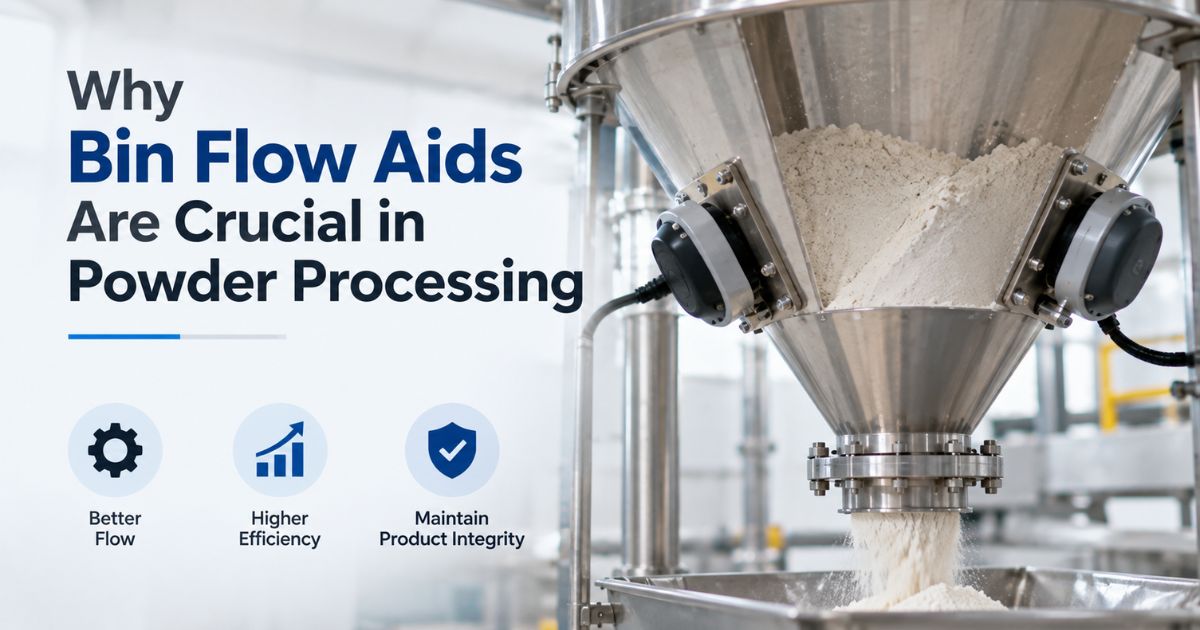
Orchid Material Handling Solutions designs and manufactures powder and bulk material handling systems that help industries maintain reliable material flow from storage through processing, conveying and discharge. In powder processing plants, one of the most common challenges is not always moving the powder from one point to another. It is getting the powder to flow consistently out of the silo, hopper or bin in the first place.
Powders can behave very differently depending on particle size, bulk density, moisture, cohesiveness and other material characteristics. A material that appears free-flowing during handling may begin to bridge, arch or form a rat-hole once stored inside a silo or hopper. When that happens, discharge becomes inconsistent, operators may need to intervene manually, and downstream equipment may not receive material at the required rate.
This is where bin flow aids become important. Properly selected flow-aid equipment can help maintain controlled discharge, improve process continuity and reduce common powder-flow problems without unnecessarily disturbing the material.
What Are Bin Flow Aids?
Bin flow aids are devices or systems used to assist the movement of powders and bulk solids from storage or process vessels such as silos, bins and hoppers. They are particularly useful when the material does not discharge consistently under gravity alone.
Depending on the powder and process, flow aids can include bin activators, vibrators, aeration systems and other discharge-assistance arrangements. The objective is to overcome flow restrictions and maintain a more consistent material discharge into downstream equipment.
Orchid’s Silo Bin Activators use a vibratory cone arrangement to support smooth and continuous discharge from silos, hoppers and bins. The system is designed to address issues such as bridging, rat-holing and material arching, particularly when handling fine or cohesive powders.
Why Does Powder Flow Become Difficult?
Powder flow is influenced by several physical and environmental factors. Unlike many liquids or free-flowing granular materials, powders can compact under their own weight and develop internal resistance to movement.
Common factors that affect powder flow include:
- Particle size and distribution
- Bulk density
- Moisture content
- Cohesiveness
- Particle shape
- Surface characteristics
- Storage time
- Consolidation under load
- Temperature and humidity
- Hopper and silo geometry
For example, a fine powder with high cohesiveness may form a stable bridge across the outlet. Material may then continue to accumulate above the bridge while little or no product reaches the discharge point.
This can create a chain reaction: inconsistent discharge affects feeding, inconsistent feeding affects production, and operators may eventually need to stop the process to manually correct the flow condition.
Common Powder Flow Problems in Silos and Hoppers
Bridging and Arching
Bridging occurs when powder forms a stable structure above the outlet, preventing the material underneath from discharging. Arching is closely related and can occur when cohesive material forms a self-supporting structure inside the vessel.
Once this happens, gravity alone may not be sufficient to restore flow. A suitable flow aid can help disturb the material structure and encourage controlled discharge.
Rat-Holing
Rat-holing occurs when material flows through a central channel while powder remains stationary around the walls of the vessel. Although some material continues to discharge, a significant portion of the stored product may remain stagnant.
This can reduce effective storage capacity and may create problems when the material needs to be fully emptied or maintained within controlled residence-time limits.
Irregular Discharge
Even when a complete blockage does not occur, powder may discharge intermittently rather than at a consistent rate. This can result in surging at downstream feeders or process equipment.
For processes involving accurate dosing, continuous conveying or controlled batching, unstable discharge can directly affect process performance.
Material Build-Up
Certain powders can stick to internal surfaces and gradually accumulate around the outlet or vessel walls. Build-up can reduce the effective flow area and make subsequent discharge more difficult.
Material accumulation can also increase cleaning requirements, particularly in food, pharmaceutical and nutraceutical applications.
How Do Bin Activators Improve Powder Flow?
A bin activator is typically positioned at the lower discharge section of a silo or hopper. Instead of relying entirely on gravity, the flow-aid mechanism introduces controlled movement to assist material discharge.
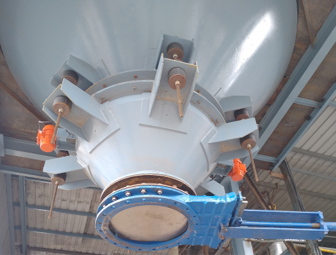
Orchid’s Silo Bin Activator uses a vibratory cone design to encourage consistent powder movement toward the outlet. This helps address bridging, rat-holing and arching while supporting continuous discharge from the storage vessel.
The important point is that vibration should not simply be treated as a way to “shake the powder harder.” The flow-aid arrangement needs to be selected according to the powder characteristics, vessel geometry and required discharge conditions. Image showing the bin activator arrangement installed below to silo. Orchid Bin activator is more efficient & reliable, Selection of bin activator depends on the product nature.
How Bin Flow Aids Improve Processing Efficiency
A reliable powder discharge system can influence several stages of the production process.
More Consistent Feeding
When powder leaves the storage vessel consistently, downstream feeders and conveying systems receive a more stable material supply. This is particularly important for processes involving controlled dosing, batching or continuous production.
Reduced Manual Intervention
Repeated flow blockages often require operators to tap the vessel, manually clear material or stop the process. A suitable flow-aid system can reduce the frequency of such interventions and make the operation more predictable.
Better Equipment Utilization
If a downstream mixer, conveyor, feeder or filling machine is waiting for material because of an inconsistent silo discharge, the equipment may not operate at its intended capacity. Improving material availability can help maintain better utilization of the overall process line.
Reduced Production Interruptions
Flow problems can create unexpected stoppages, particularly when the storage vessel feeds a critical production stage. Maintaining controlled discharge helps reduce the likelihood of interruptions caused by powder bridging or inconsistent flow.
How Bin Flow Aids Can Support Product Integrity
Powder flow is not only an efficiency issue. In applications where product consistency and hygiene are important, uncontrolled material movement can also affect product integrity.
For example, repeated manual intervention can increase the possibility of contamination or product exposure. Excessive mechanical disturbance can also be undesirable for certain sensitive materials.
A properly engineered flow-aid system aims to provide the required assistance without unnecessarily aggressive handling.
For pharmaceutical, food and nutraceutical applications, Orchid offers hygienic bin activator configurations in SS304 and SS316L, with dust-tight and cGMP-oriented construction options.
Types of Bin Flow Aid Configurations
The right flow-aid arrangement depends on the powder, vessel and process. Orchid currently offers several Silo Bin Activator configurations.
Standard Bin Activator
Designed for general powders and free-flowing materials where additional discharge assistance is required.
Heavy-Duty Bin Activator
Designed for bulk solids and applications involving higher material loads or higher bulk density.
Hygienic GMP Bin Activator
Available in SS304 / SS316L construction for applications where hygienic design and controlled material handling are important, including pharmaceutical and food processing.
Custom Inline Bin Activator
Designed for integration with specific silo, hopper and downstream process arrangements where the flow-aid equipment needs to fit into an existing or customized material handling system.
Where Are Bin Flow Aids Used?
Bin flow aids are particularly relevant in industries where powders or bulk solids need to be stored and discharged reliably.
Pharmaceuticals & Nutraceuticals
Pharmaceutical powders, APIs, excipients and nutraceutical ingredients can have challenging flow characteristics. Hygienic construction and controlled discharge become particularly important where contamination control and batch consistency are critical.
Food & Spices
Materials such as flour, sugar, spices and protein powders can experience flow problems depending on moisture, particle characteristics and storage conditions.
Chemicals & Fertilizers
Chemical powders, pigments, agrochemicals and fertilizer materials can vary significantly in bulk density and flowability. Heavy-duty or customized flow-aid arrangements may be required for reliable discharge.
Plastics & Polymers
Resin powders, additives and other polymer-related bulk materials may require controlled discharge depending on their physical characteristics.
Orchid’s bin activator systems are positioned for pharmaceutical, food, nutraceutical, chemical, fertilizer and polymer applications.
Bin Activator vs. Vibrator vs. Aeration Pad
Not every powder requires the same flow-assistance method.
A bin activator provides mechanical flow assistance at the discharge section and can be particularly useful where bridging, rat-holing or arching needs to be addressed.
Pneumatic or electric vibrators can be used to introduce vibration to selected areas of a hopper, bin or related equipment. They may be suitable for applications where localized assistance is required.
Aeration pads introduce air into suitable powders to improve flowability. They can be useful for materials where aeration helps reduce internal friction and supports discharge.
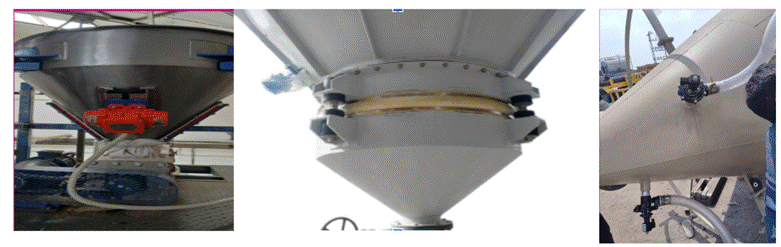
The selection should be based on actual powder characteristics and vessel design. Using a flow aid simply because it is commonly used in another application does not guarantee good results.
How to Select the Right Bin Flow Aid
A good flow-aid selection starts with understanding the material rather than selecting the equipment first.
Understand the Powder
Important characteristics include particle size, bulk density, moisture, cohesiveness, flowability, abrasiveness and sensitivity to mechanical disturbance.
Evaluate the Storage Vessel
The silo or hopper geometry, outlet size, cone angle, capacity and material of construction all influence how the powder behaves during discharge.
Define the Required Flow Rate
The flow aid should support the required discharge rate without creating unnecessary material disturbance or downstream surging.
Consider Downstream Equipment
The discharge arrangement should be compatible with whatever follows the storage vessel, such as a rotary valve, screw conveyor, pneumatic conveying system, feeder, mixer or filling machine.
Consider Hygiene and Material of Construction
For food, pharmaceutical and nutraceutical applications, stainless-steel construction and hygienic design may be required. Orchid’s bin activators are available in MS, SS304 and SS316L, depending on the application.
Technical Considerations for Bin Activators
Orchid’s published Silo Bin Activator specifications include configurations suitable for silos ranging from 1 ton to 100 tons, with cone sizes from 400 mm to 3000 mm. The drive arrangement uses a vibratory motor with adjustable frequency, while construction options include MS, SS304 and SS316L. Food-grade flexible connectors are also available for suitable applications.
| Parameter | Typical Orchid Configuration |
| Application | Silos / Hoppers / Bins |
| Suitable Capacity | 1–100 tons |
| Cone Size | 400–3000 mm |
| Drive | Vibratory Motor |
| Frequency | Adjustable |
| Construction | MS / SS304 / SS316L |
| Sealing | Food-grade Flexible Connectors |
| Integration | Silos / Hoppers / Downstream Conveying Systems |
The final configuration should be selected according to the powder characteristics, silo geometry, required discharge rate and downstream process requirements.
Integrating Bin Flow Aids Into a Complete Powder Handling System
A bin activator is often only one component of a larger powder handling system.
For example, a typical process may involve:
Bulk Bag Discharger → Pneumatic Conveying → Silo Storage → Bin Activator → Rotary Valve / Feeder → Mixer or Process Equipment
In such a setup, each component needs to work together. A well-designed silo with a suitable flow aid can still experience downstream issues if the rotary valve, feeder or conveying system is incorrectly sized.
Orchid provides integrated material handling solutions covering storage, discharge, conveying, feeding, weighing, mixing and filling, allowing flow aids to be considered as part of the wider process rather than as isolated accessories. Orchid’s silo systems can also incorporate bin activators, aeration pads, weighing modules, level sensors and bin vent filters.
[Explore Powder Handling Solutions]
How Bin Flow Aids Can Improve Overall Plant Performance
When powder flow is reliable, the benefits can extend beyond the silo itself.
A more consistent discharge can help maintain stable feeding to downstream equipment, reduce operator intervention and minimize production interruptions caused by material blockages. It can also support cleaner and more predictable material handling, particularly when the storage and discharge system is designed as an enclosed process.
For manufacturers handling difficult powders, the goal should not simply be to make the material move. The objective is to achieve controlled, repeatable and application-appropriate flow while protecting product quality and maintaining efficient production.
Common Mistakes When Selecting Flow Aids
One common mistake is selecting a flow aid based only on the powder name. Two materials with similar names can behave very differently depending on particle size, moisture, bulk density and processing history.
Another mistake is focusing only on the discharge device without evaluating the complete silo or hopper design. Vessel geometry, outlet dimensions and downstream equipment can all influence flow performance.
It is also important not to assume that stronger vibration automatically means better flow. Excessive vibration can create unwanted material movement, equipment stress or other process issues. The flow aid should therefore be matched to the material and operating conditions.
Why Choose Orchid for Powder Flow Solutions?
Orchid Material Handling Solutions combines powder handling, bulk storage and discharge expertise to develop systems around the actual requirements of the process. Its Silo Bin Activators are designed to support smooth and continuous discharge from silos, hoppers and bins while addressing common powder-flow challenges such as bridging, rat-holing and arching.
The systems are available in standard, heavy-duty, hygienic GMP and customized configurations, allowing the construction, size and flow-assistance arrangement to be selected according to the application.
Orchid’s broader powder handling portfolio also includes Silo Storage Systems, Rotary Valves, Diverter Valves and Vibro Sifters, making it possible to integrate discharge assistance with the wider material handling process.
Frequently Asked Questions
A bin flow aid is a device used to assist the movement of powders and bulk solids from silos, hoppers or bins when gravity alone does not provide reliable discharge. Depending on the application, flow aids can include bin activators, vibrators and aeration systems.
Bin activators are designed to help address powder-flow problems such as bridging, rat-holing, arching and inconsistent discharge. Orchid’s Silo Bin Activators use a vibratory cone arrangement to support smooth and continuous material flow.
Yes. Bin activators can be particularly useful for fine or cohesive powders that have a tendency to bridge, rat-hole or form arches inside storage vessels. The actual configuration should be selected according to the powder’s flow characteristics.
A bin activator is generally integrated into the discharge section of a silo or hopper and uses a dedicated flow-assistance arrangement. A vibrator can be mounted on selected areas of a vessel to introduce vibration. The appropriate solution depends on the powder and vessel design.
Yes. Hygienic configurations are available for pharmaceutical and nutraceutical applications. Orchid offers SS304 and SS316L bin activator options designed for applications where hygienic construction and controlled powder handling are important.
Bin activators can be considered for a wide range of powders and bulk solids, including pharmaceutical powders, food ingredients, spices, chemicals, fertilizers, polymer powders and other difficult-flow materials. Material characteristics should be evaluated before selecting the flow-aid system.
Yes. A bin activator can be integrated with downstream equipment such as rotary valves, feeders and pneumatic conveying systems. Orchid’s bag unloading and silo systems are designed to integrate with mechanical and pneumatic material transfer arrangements.
Selection should consider the powder’s bulk density, particle size, cohesiveness, moisture, flowability and sensitivity, along with silo geometry, outlet size, required discharge rate and downstream equipment. Application-specific engineering is recommended for difficult-flow powders.
Conclusion
Reliable powder flow is a fundamental part of efficient powder processing. When material bridges, rat-holes or discharges inconsistently from a silo or hopper, the problem can quickly affect feeding, production continuity, operator workload and overall process efficiency.
Bin flow aids such as Silo Bin Activators, vibrators and aeration systems can provide the additional assistance required to maintain controlled material discharge. However, the right solution depends on the powder characteristics, storage vessel and downstream process.
With Orchid Material Handling Solutions, flow-aid equipment can be considered as part of a complete powder handling system, from bulk storage and discharge to conveying, feeding, mixing and filling.
Looking to improve powder flow in your silo or hopper?
Connect with Orchid Material Handling Solutions to discuss your powder characteristics, storage capacity, required discharge rate and downstream process requirements.