- sales@orchidmhs.com
- +91 9322487698
- +91 7028807698
- ISO 9001:2015

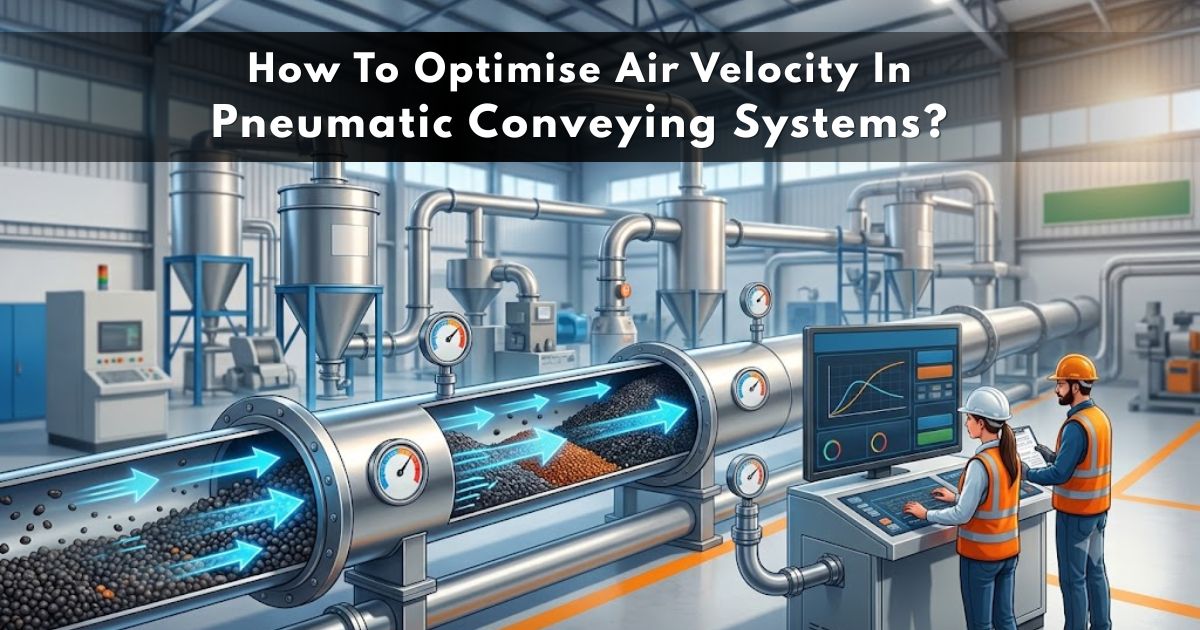
How to Optimise Air Velocity in Pneumatic Conveying Systems?
31 Jul 2026
At Orchid Material Handling Solutions, we design customized Pneumatic Conveying Systems by carefully
evaluating material characteristics, production requirements, and plant layouts. Instead of relying on
standard designs, every system is engineered to achieve the optimum air velocity for efficient and reliable
material handling. Orchid has the latest software to calculate air velocity as per conveying length, bulk
density, transfer capacity. Orchid also has an experienced engineers team to validate the calculation based
on their working experience.
Air velocity is one of the most critical factors in the performance of a Pneumatic Conveying System. It
directly affects how efficiently powders, granules, and bulk solids move through pipelines, influencing
everything from product quality and energy consumption to equipment lifespan and maintenance costs.
When air velocity is not properly optimized, manufacturers may experience frequent pipeline blockages,
excessive pipe wear, material degradation, inconsistent product flow, and higher operating costs. On the
other hand, a well-balanced system ensures smooth material transfer, improved productivity, and long-term
operational reliability.
Why Air Velocity Matters in Pneumatic Conveying Systems
The primary function of conveying air is to keep materials suspended throughout the pipeline while transporting them from one process to another. However, achieving the right balance is essential.
If the air velocity is too low, materials may settle inside the pipeline, causing blockages and production interruptions. If it is too high, the system may consume unnecessary energy while increasing product degradation and pipeline wear.
Optimizing air velocity helps manufacturers:
- Improve conveying efficiency
- Reduce product loss
- Lower energy consumption
- Minimize maintenance requirements
- Extend equipment life
- Maintain consistent product quality
8 Best Practices to Optimise Air Velocity in Pneumatic Conveying Systems
Understand Your Material Characteristics
Every bulk material behaves differently during conveying. Factors such as particle size, bulk density, moisture content, abrasiveness, and flowability determine the air velocity required for efficient transportation.
For example, pharmaceutical powders and food ingredients require gentle handling, while minerals or plastic granules may require different conveying conditions. Designing a system based on actual material properties is the first step toward achieving optimum performance.
Choose the Right Conveying Method
Air velocity requirements vary depending on the type of pneumatic conveying system.
Vacuum Conveying Systems are generally preferred for food processing, pharmaceuticals, and nutraceuticals where gentle handling and contamination-free transfer are essential.
Pressure Conveying Systems are better suited for longer conveying distances and higher-capacity applications such as chemicals, cement, plastics, and mineral processing.
Selecting the appropriate conveying method allows the system to operate efficiently without excessive airflow.
Avoid Excessively High Air Velocity
Higher air velocity does not always mean better conveying performance.
Excessive airflow can result in:
- Product degradation
- Particle breakage
- Increased pipeline erosion
- Higher blower power consumption
- More frequent maintenance
The objective should always be to convey materials at the lowest effective velocity while maintaining continuous material flow.
Prevent Low Air Velocity
Operating below the required conveying velocity can create several operational challenges.
Common issues include:
- Material settling inside pipelines
- Frequent blockages
- Interrupted production
- Uneven material flow
- Difficulty restarting the system
Maintaining the minimum conveying velocity helps ensure that materials remain suspended throughout the conveying process.
Design an Efficient Pipeline Layout
Pipeline design has a significant impact on air velocity and overall conveying efficiency.
A well-designed system should consider:
- Pipeline diameter
- Conveying distance
- Number of bends
- Vertical lifts
- Pressure losses
Reducing unnecessary bends and optimizing pipeline routing minimizes resistance, allowing materials to move efficiently without requiring excessive airflow.
Match Airflow with Production Capacity
Conveying systems should be designed according to actual production requirements rather than current operating conditions alone.
Consider factors such as:
- Hourly throughput
- Batch size
- Future production expansion
- Continuous or batch operation
Matching airflow with production demand improves efficiency while preventing unnecessary energy consumption.
Use Automation for Better Process Control
Modern Pneumatic Conveying Systems are equipped with PLC and HMI-based automation to monitor airflow and system performance in real time.
Automation helps manufacturers:
- Maintain consistent conveying conditions
- Monitor pressure variations
- Improve process reliability
- Reduce manual intervention
- Increase operational efficiency
Integrated automation also enables seamless coordination with Industrial Mixers, Weighing & Batching Systems, Bulk Storage Systems, and Industrial Control Panels. Orchid has a complete equipment range from start to end process. Automation & integration of all process equipment is available at our end.
Perform Regular System Maintenance
Even the best-designed conveying system requires routine maintenance to maintain optimum air velocity.
Regular inspections should include:
- Pipeline wear
- Air leakage
- Filter cleaning
- Blower performance
- Rotary airlock inspection
- Pressure monitoring
Preventive maintenance helps avoid unexpected downtime while extending equipment life. Orchid always recommended maintaining spare parts along with equipment. During maintenance spare parts help continue process flow without interruption and no need to wait a long time for part maintenance.
Common Signs Your Pneumatic Conveying System Needs Air Velocity Optimisation
If your system frequently experiences the following issues, it may indicate that the air velocity requires adjustment:
- Frequent pipeline blockages
- Material degradation during conveying
- Excessive dust generation
- High energy consumption
- Uneven material flow
- Increased pipeline wear
- Unexpected production downtime
Identifying these warning signs early helps prevent costly operational disruptions.
Benefits of Optimising Air Velocity
A properly designed Pneumatic Conveying System delivers benefits that extend beyond material transportation.
Optimizing air velocity helps manufacturers:
- Improve conveying efficiency
- Reduce operating costs
- Minimize product degradation
- Lower maintenance requirements
- Increase equipment lifespan
- Improve workplace cleanliness
- Maintain consistent product quality
- Support automated manufacturing processes
These improvements contribute to higher productivity and long-term operational reliability.
Why Choose Orchid Material Handling Solutions?
At Orchid Material Handling Solutions, we understand that every manufacturing process is unique. That’s why our Pneumatic Conveying Systems are designed based on material characteristics, production capacity, conveying distance, and plant layout instead of using standardized configurations.
Our engineering team develops complete bulk material handling solutions by integrating Pneumatic Conveying Systems, Industrial Mixers, Bulk Storage Systems, Weighing & Batching Systems, Powder Handling Accessories, Bag Filling Systems, Dust Air Filtration Systems, Crushers, and Industrial Control Panels into one seamless production process.
With over 18 years of experience serving the food, pharmaceutical, nutraceutical, chemical, plastics, fertilizer, and mineral industries, Orchid helps manufacturers improve productivity while reducing operational costs through customized engineering solutions.
Frequently Asked Questions
There is no universal air velocity for all applications. The ideal velocity depends on the material properties, conveying distance, pipeline design, and production requirements.
Excessive air velocity can increase energy consumption, damage fragile materials, accelerate pipeline wear, and increase maintenance costs.
Low air velocity can cause materials to settle inside the pipeline, resulting in blockages, inconsistent material flow, and production downtime.
Manufacturers should evaluate material characteristics, optimize pipeline layouts, select the appropriate conveying method, use automation for process control, and perform regular maintenance to maintain efficient airflow.
Orchid Material Handling Solutions designs customized Pneumatic Conveying Systems that optimize airflow, improve process efficiency, and integrate seamlessly with complete bulk material handling solutions. Our engineering-first approach ensures reliable, energy-efficient, and scalable systems tailored to each manufacturing application.