- sales@orchidmhs.com
- +91 9322487698
- +91 7028807698
- ISO 9001:2015


Pipe Bends vs Pipe Elbows in Pneumatic Conveying Systems
06 Jun 2026
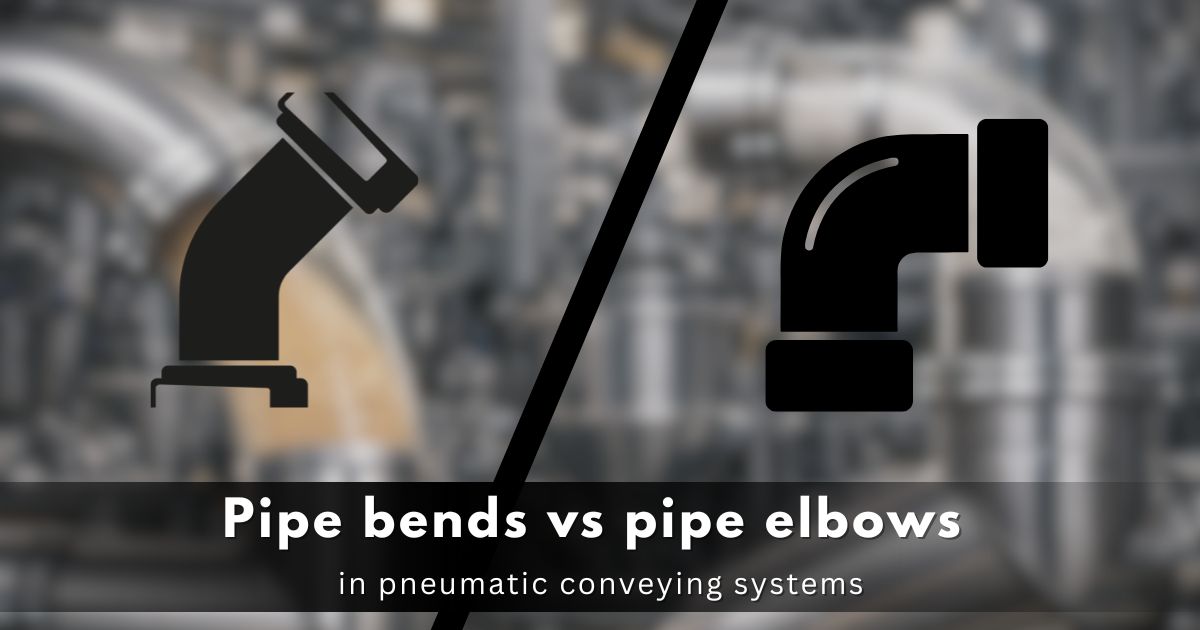
We Orchid material handling systems involved in pneumatic conveying systems, pipeline design plays a much bigger role than most industries initially realize. Even a small component like a pipe bend or elbow can directly impact material flow, pressure drop, pipeline wear, energy consumption, and product degradation.
Based on our engineering calculation & our expertise. We can suggest which type of pipe bend /elbow is suitable for your application.While both are used to change the direction of material flow, they behave very differently inside a conveying line – especially in systems handling powders, granules, or abrasive materials. Choosing the wrong configuration can lead to frequent maintenance issues, material buildup, and reduced conveying efficiency.
As a pneumatic conveying systems manufacturer, Orchid Material Handling Solutions optimizes pipeline routing based not just on layout, but also on material characteristics and conveying velocity to ensure long-term operational reliability.
Understanding Pipe Bends and Pipe Elbows
Orchid material handling work in turnkey project manufacturing & designing of equipment, Based on our study & design on both components redirect airflow and material within a pipeline, the difference lies in the radius and flow behavior. The main thing is to choose which is suitable for your application & here we enter to give you a solution on that.
Pipe Elbow
A pipe elbow typically has a shorter radius, creating a sharper directional change in the conveying line. These are commonly used where installation space is limited.
Pipe Bend
A pipe bend usually features a longer radius and smoother curvature, allowing material to flow more gradually through the pipeline.
This seemingly small difference has a major effect on conveying performance.
Why the Difference Matters in Pneumatic Conveying
Orchid material handling use specific 3D software for designing to check how the actual material flows inside the pipe line bend/ elbow. In standard fluid pipelines, elbows and bends may perform similarly. But in pneumatic conveying, materials travel at high velocity along with airflow. Sudden directional changes can create:
- Increased pipeline wear
- Product degradation
- Higher pressure drop
- Material accumulation
- Unstable flow behavior
This is why pipeline routing becomes a critical part of system design rather than just a mechanical connection detail.
Pipe Elbows: Where They Work Best
Pipe elbows are generally preferred where compact layouts and shorter routing are required.
Key Advantages of Pipe Elbows
- Compact installation
- Easier integration in limited spaces
- Lower initial cost
- Suitable for less abrasive materials
Typical Applications
- Short conveying distances
- Low-wear materials
- Compact industrial setups
However, because elbows create sharper directional changes, they are more prone to:
- Material impact wear
- Product breakage
- Pressure losses
This becomes more noticeable in systems handling abrasive powders or fragile materials.
Pipe Bends: Why Industries Often Prefer Them
Pipe bends provide a smoother transition for airflow and material movement, making them more suitable for demanding conveying applications.
Key Advantages of Pipe Bends
- Reduced wear inside pipelines
- Smoother material flow
- Lower pressure drop
- Reduced product degradation
- Better long-term operational efficiency
Typical Applications
- Abrasive powders
- Fragile granules
- High-velocity conveying systems
- Long-distance pneumatic conveying
In many industrial setups, long-radius bends are preferred because they improve system reliability and reduce maintenance frequency over time.
Quick Comparison: Pipe Bend vs Pipe Elbow
| Parameter | Pipe Elbow | Pipe Bend |
| Radius | Short radius | Long radius |
| Flow Direction Change | Sharp | Gradual |
| Pressure Drop | Higher | Lower |
| Pipeline Wear | Higher | Lower |
| Product Degradation | Moderate to high | Minimal |
| Space Requirement | Compact | Requires more space |
| Best For | Tight layouts | Efficient conveying systems |
Which One is Better for Pneumatic Conveying?
There’s no universal answer – it depends on the material and system requirements.
Pipe Elbows are Suitable When:
- Installation space is limited
- Material is non-abrasive
- Conveying distances are shorter
- Budget-focused setups are prioritized
Pipe Bends are Preferred When:
- Handling abrasive or fragile materials
- Reducing maintenance is important
- System efficiency is a priority
- Long-distance conveying is involved
In modern pneumatic conveying systems, many industries now prioritize long-term operational efficiency over short-term installation convenience, making pipe bends a preferred option in critical conveying lines.
Impact on System Efficiency & Maintenance
One of the most overlooked aspects of pneumatic conveying is how routing components influence energy and maintenance costs.
A poorly designed elbow configuration can lead to:
- Frequent pipeline replacement
- Material buildup
- Increased blower load
- Production downtime
On the other hand, optimized bend configurations help maintain smoother airflow, improving both conveying stability and equipment life.
This is why system providers like Orchid Material Handling Solutions evaluate not only the conveying method, but also the complete pipeline routing during system planning.
Final Thoughts
In pneumatic conveying systems, pipe bends and pipe elbows may appear similar externally, but their impact on performance is significantly different. While elbows offer compact installation advantages, bends provide smoother flow, reduced wear, and better long-term efficiency.
The right choice ultimately depends on factors like material behavior, conveying velocity, available space, and maintenance priorities. A properly engineered routing design can significantly improve conveying performance while reducing operational challenges over time.
You can connect with us for your queries. Mail id – sales@orchidmhs.com | Website – https://www.orchidmaterialhandling.com/contact-us/ | contact no. +91 9322487698 | Social – facebook, linkedin
FAQS
pipe elbow has a shorter radius and sharper directional change, while a pipe bend provides a smoother and longer-radius flow path
Pipe bends are generally preferred for abrasive or fragile materials because they reduce wear and product degradation.
The sharp directional change increases material impact velocity against pipeline walls, leading to higher wear.
Yes, pipe bends may have a higher initial cost and require more installation space, but they often reduce long-term maintenance costs.